Beyond the Molecule: Why Psilocybin Legalization Must Fund the Cure, Not Just the Catalyst
The current psychiatric paradigm is a profound institutional failure for many patients with severely difficult and seemingly intractable problems.
For decades, the standard of care has prioritized the chronic management of symptoms over genuine healing. For instance, millions of individuals are prescribed selective serotonin reuptake inhibitors that blunt their emotional reality, offering a chemical shield while leaving the root causes of their suffering entirely untouched.
We are long overdue for a total entheogenic reformation of public health, medicine, science, politics, and law. People are already seeking psilocybin in the unregulated underground to escape agony. But this shadow movement is structurally broken. It leaves our most vulnerable populations at profound risk because it lacks the essential, clinical safety net.
The molecule is not the problem. Prohibition is the problem. Licensed therapists are currently paralyzed by the law. They cannot legally guide a high-dose psilocybin session. They cannot legally bill health insurance for the complex, vital work of psychedelic integration.
We must legalize psilocybin for one overriding, urgent reason. Legalization is the only mechanism that can legally mandate and financially cover the psychotherapeutic wraparound services that make this medicine actually work.
The Cellular Imperative of Integration
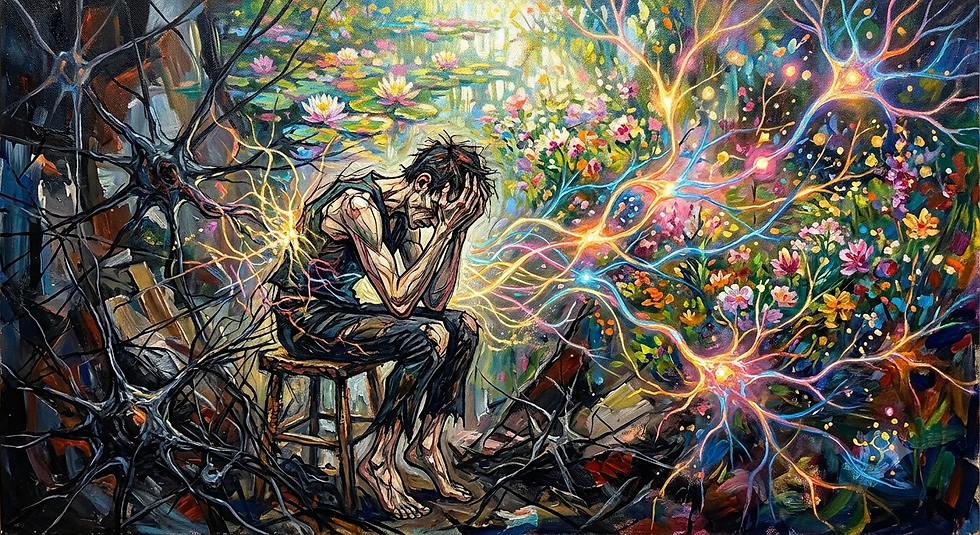
To understand why integration is a biological necessity, we must look at the cellular mechanics of trauma. As we age, our brains physically harden. The extracellular matrix remodels itself. Perineuronal nets physically wrap around our neural pathways, locking our habitual behaviors, deeply entrenched traumas, and addictions into rigid, inflexible architecture.
This biological lockdown keeps our minds stable, but it also traps us in neurological cages. Psilocybin acts as the biochemical key to shatter those cages. When ingested, it binds to the 5-HT2A receptor and triggers an intracellular cascade. It floods the brain with neurotrophins, specifically brain-derived neurotrophic factor.
This biological storm temporarily dissolves the molecular brakes of adulthood. It dismantles those rigid perineuronal nets. It forces the brain to reopen the developmental "critical periods" of learning. The mind is thrown into a temporary state of extreme metaplasticity, eager and desperate to form entirely new architectural connections.
Leaving a patient alone in this hyper-plastic state is sheer medical negligence. A mind blown wide open and thrust back into a hostile, unsupportive environment is at risk of driving its trauma even deeper. This is where integration therapy becomes a non-negotiable imperative.
The integration therapist is the architect of the reopened mind. They are the trained clinical guide who physically helps the patient wire new, adaptive behaviors into their softened brain before the critical window permanently seals shut.
Shattering Cognitive Rigidity
This process is brilliantly mapped by the REBUS model, which tracks the relaxation of beliefs under psychedelics. In severe psychiatric conditions, the brain operates on hyper-precise, rigid cognitive loops. These loops dictate the ruminations of depression, the restrictive body-image distortions of anorexia, and the cue-triggered cravings of addiction.
Psilocybin globally desynchronizes the Default Mode Network, the brain system responsible for these rigid self-referential loops. The patient experiences profound ego dissolution. Their deepest, most intractable beliefs are temporarily shattered.
But the medicine only breaks the mold. The therapist builds the new foundation. Integration is an active, structured clinical intervention. It requires rigorous, evidence-based frameworks to translate ineffable, abstract visions into concrete behavioral change.
Clinicians utilize Acceptance and Commitment Therapy to build lasting psychological flexibility. They actively teach patients to separate from their destructive thoughts rather than blindly obeying them. They deploy the ACER model—Accept, Connect, Embody, Restore—to anchor the fleeting, mystical feelings of interconnectedness into a daily somatic reality, utilizing community support to prevent the long-term relapse of depression. They utilize Internal Family Systems to help patients safely approach and process the exiled, traumatized sub-personalities that invariably surface during profound ego dissolution.
The Economics of Healing
Under our current prohibitive laws, these clinical interventions are treated as luxuries. Because they cannot be billed to private insurance or Medicaid, comprehensive psychedelic care is reserved exclusively for those with immense disposable income. The working class is left to navigate their neuroplastic vulnerability alone.
Legalization fundamentally alters these transaction cost dynamics. It forces the mainstream healthcare system to recognize psilocybin as a clinically coded, legitimate medical intervention. It unlocks the regulatory framework required to establish standard medical billing codes for the preparation, the dosing, and the integration sessions.
For health insurance providers, the economic argument is absolute. Funding a finite, targeted twelve-week course of psilocybin-assisted integration therapy is drastically cheaper than the alternative. It is vastly more cost-effective than paying for a lifetime of daily psychiatric medications, revolving-door inpatient rehab stints, and decades of chronic disability claims.
The Undeniable Clinical Reality
The empirical outcomes of integration-driven psychedelic therapy represent an undeniable return on investment. In the realm of oncology, standard psychiatric treatments routinely fail to touch the spiritual terror of a terminal cancer diagnosis.
Yet, rigorous clinical trials demonstrate that a single high-dose psilocybin intervention, when firmly embedded in integration therapy, yields up to an 80 percent sustained remission of severe depression and anxiety. Long-term follow-ups show this remission lasts for nearly five years. Patients completely restructure their fundamental relationship with mortality.
In the treatment of severe addiction, the financial and clinical gains are even starker.
Standard nicotine replacement therapies yield a dismal 22.5 percent success rate after one year. They only address physical withdrawal.
However, when psilocybin is embedded in a highly structured cognitive behavioral integration protocol, the results are unprecedented. Up to 80 percent of patients achieve continuous abstinence at six months. A staggering 60 percent remain entirely smoke-free at 30 months. The medicine disrupts the craving, but the integration therapy allows the patient to entirely dismantle their deeply held identity as an addict.
This exact synergy is mirrored in Alcohol Use Disorder trials, where heavy drinking days plummet from 23.6 percent to under 10 percent when the pharmacological intervention is paired with a twelve-week integration framework.
Integration therapy even penetrates the extreme cognitive inflexibility of eating disorders. In conditions like anorexia nervosa, patients suffer from immensely rigid, over-controlled cognitive states. Psilocybin disrupts those immovable beliefs about body image and caloric restriction. The integration therapist leverages this temporarily disrupted state to drastically reduce treatment dropout rates, building adaptive behavioral patterns that standard therapy simply cannot achieve alone.
Legalizing psilocybin is not merely about deregulating a chemical compound. It is about aggressively regulating and funding the care that surrounds it. We must fiercely resist any hyper-capitalist model that attempts to strip away the human element for the sake of scalable, rapid patient turnover.
We open the door to the mind by changing the law. But we only heal the patient by legally mandating and financially backing the integration process. Legalization is our only path to safe, equitable, and fully insured psychological liberation.
XxxxxxxxxxxX
"For over half a century, the high priests of modern psychopharmacology have offered us a cruel bargain: a lifetime subscription to chemical dullness, trading genuine awakening for the quiet management of symptoms.
"They hand out daily pills that build a glass floor beneath our grief, keeping us from falling any deeper while ensuring we never touch the earth again. But the human spirit is too vast for such small cages. When we speak of reforming our laws to bring psilocybin into the light, we are not chasing after a weekend intoxication or a corporate commodity.
"We are demanding the return of our biological birthright—the reopening of those critical windows where the mind can finally shed its rigid, calcified armor and remember how to grow. The mushroom is merely the key that turns the heavy iron lock; it is the human hand of the integration guide, sitting beside us in the quiet aftermath, that helps us push the door wide open and build a house we can actually live in.
"Without that structured, insured care, we are merely throwing open the gates of a walled garden and leaving the traveler to wander the wilderness alone. Legalization without funded integration is a betrayal of the cure."