Hacking the Histamine Gate: The Biological Rescue Mission for Childhood Trauma
- One Love Energy
- Jun 12
- 7 min read
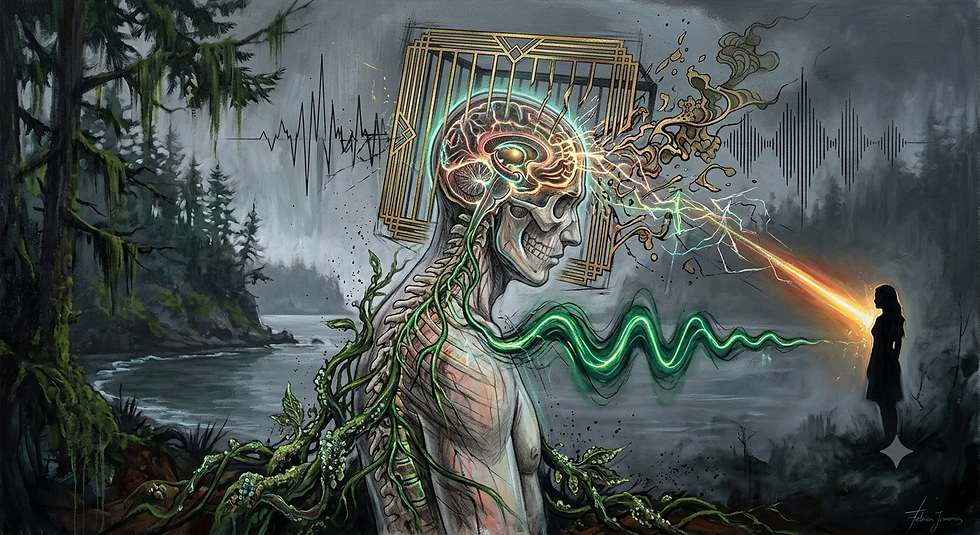
Surviving childhood abuse isn't just about carrying painful memories. It physically rewires a growing brain. Imagine a relentless tug-of-war inside your head. On one side is your conscious mind—the part of you that wants peace, control, and to live fully in the present. On the other side is your deeper brain—the ancient, emotional survival center that is constantly bracing for an attack.
We used to think trauma responses were simply about avoiding "triggers." But recent breakthroughs reveal a hidden puppet master at work: brain histamine neurons. Deep in your hypothalamus, these neurons slowly pulse, rising and falling, creating a biological "priming state." They act as a chemical gatekeeper, controlling the moment-to-moment accessibility of your memories.
This is where the agonizing tension lies. Your conscious mind doesn't freely choose when to feel safe and when to panic. Instead, as these histamine levels naturally fluctuate, they decide whether the vault doors to your memories are bolted shut or swung wide open.
When histamine activity is high, your basolateral amygdala—the brain's fear center—is primed and ready. The memory becomes vivid, accessible, and terrifyingly real. When it's low, that exact same memory is stubbornly out of reach.
In a traumatized brain, this deep histamine rhythm is fundamentally corrupted. It keeps your survival circuits perpetually primed for terror. Even in a quiet, peaceful room, a silent shift in your brain's histamine state can make a twenty-year-old threat feel like it is destroying you right now. Healing means finding ways to intercept and rewrite this chemical gating system.
Music is a profound way to hack this mechanism. It acts as an acoustic override that completely bypasses your thinking brain. When the histamine gate swings open and primes your amygdala for panic, slow, rhythmic music travels straight into your deep brainstem. It acts as a physical brake pedal, forcing your heart rate to slow and pulling the panicked brain into a temporary sanctuary. It lowers the baseline arousal so that high-histamine states don't automatically result in an explosion of fear.
Love creates an even more painful but necessary collision. For survivors, the very people meant to provide safety became the source of danger. But when you experience safe, authentic connection today, your brain releases oxytocin. When the histamine state primes your brain to expect betrayal, this oxytocin floods the system like a wet blanket. It actively fights the amygdala's alarm, physically proving to your nervous system that the love you feel today is stronger than the historical ghost of abuse.
To truly break the deep brain's grip, psilocybin offers a radical reset. It temporarily turns off the rigid, habitual parts of your conscious mind. Under its influence, when the histamine gate opens your most painful memories, the usual paralyzing terror is miraculously muted. You are given the harrowing but beautiful chance to look at the darkest stains of your childhood without being swallowed by them. When the memory is stored away again, the story remains, but the emotional venom has been permanently drained.
Finally, high-quality cannabis speaks directly to the deep brain's inability to let go. Trauma exhausts the body's natural system for unlearning fear. Now, when a high-histamine state triggers a flashback, cannabis steps in to fill that void. It floods the deep emotional centers with the exact chemicals needed to finally release the grip of hyper-vigilance. It teaches the amygdala fear extinction, giving the deep brain the biological permission to realize the threat is finally over.
Healing from childhood trauma isn't just about thinking your way to a better life; it is a biological rescue mission. You are actively using music, love, psilocybin, and cannabis to outsmart your brain's histamine gates and rewrite the primal architecture of survival into an architecture of peace.
This relentless tug-of-war between your conscious desire for peace and your deeper brain’s primal alarms does not exist in a vacuum. It operates on a biological schedule. If the infraslow histamine fluctuations are the moment-to-moment gatekeepers of your traumatic memories, your circadian rhythm is the master architect of the fortress itself.
Childhood abuse doesn't just hijack your memory centers; it shatters your internal clock. To understand the full biological reality of PTSD, we must look at how the trauma imprint fundamentally alters your neuroscience, endocrinology, and biochemistry on a 24-hour rotation.
The Master Clock Under Siege
Deep in your hypothalamus, resting just above the optic nerves, lies the suprachiasmatic nucleus (SCN). This is your brain’s master clock. It regulates your 24-hour circadian rhythm by communicating with the hypothalamic-pituitary-adrenal (HPA) axis—the exact system responsible for your fight-or-flight stress response.
In a healthy brain, this system follows a precise biochemical wave. Cortisol surges in the morning to wake you up, slowly tapering off as the day progresses. By nightfall, melatonin rises to initiate restorative sleep. But the traumatized brain lives in an inverted, exhausted reality.
Childhood abuse leaves the HPA axis chronically dysregulated. The morning cortisol surge is often flattened, leaving you feeling lethargic and disconnected upon waking. Conversely, as evening approaches, the traumatized deeper brain anticipates vulnerability. Instead of dropping, evening cortisol remains elevated. Corticotropin-releasing hormone (CRH) continues to flood the system, keeping the amygdala hyper-vigilant precisely when it should be resting.
The Nighttime Histamine Ambush
This circadian breakdown is directly tied to the histamine gating system we explored earlier. Histamine neurons, located in the same hypothalamic neighborhood as your master clock, are fundamentally designed to promote wakefulness. Their baseline activity should drop drastically at night, allowing the memory gates to close so the brain can consolidate and clean itself during sleep.
But in PTSD, the deeper brain refuses to power down. Driven by that elevated evening cortisol, histamine neurons continue to fire inappropriately into the night.
Psychologically, this creates the dreaded phenomenon of "sundowning"—the rising panic as daylight fades. The conscious, free mind is exhausted from battling trauma triggers all day, but the deeper survival brain is forcefully propping the histamine gates wide open. This catastrophic biological mismatch is what produces night terrors and severe insomnia. Your conscious defenses are down, but the memory vault is unlocked and highly accessible.
Modulating the Clock: A Biochemical Counter-Offensive
To reclaim your nights and repair this circadian fracture, the four modalities—music, love, psilocybin, and cannabis—can be utilized as precise neurobiological tools to force the biological clock back into rhythm.
Acoustic Entrainment
Music serves as an exogenous (external) pacemaker for a broken internal clock. Because trauma dysregulates the autonomic nervous system, the brain struggles to signal the body that it is time to wind down.
The Biochemistry: Slower tempos (around 60 beats per minute) actively engage the vagus nerve. This acoustic stimulation directly down-regulates the sympathetic nervous system, mechanically forcing a reduction in circulating cortisol and norepinephrine. By artificially inducing this physiological calm in the evening, music helps create the biological environment necessary for melatonin to finally release.
The Twilight Biochemistry of Love
The deepest psychological dread of night is the ancient mammalian vulnerability of sleeping in the dark. Deep, authentic connection before sleep provides a potent biochemical counter-weight to this fear.
The Endocrinology: Physical touch and emotional safety trigger the release of oxytocin. Oxytocin actively inhibits the release of CRH from the hypothalamus. By shutting down the stress cascade at its very source, love biochemically signals to the deeper brain that the environment is secure. This overrides the trauma-induced evening cortisol spike, allowing the parasympathetic nervous system to take the wheel.
Psilocybin and SCN Plasticity
The rigid, broken circadian loop of PTSD is notoriously difficult to reset with standard therapies. Psilocybin offers a profound interruption to this dysregulated cycle.
The Neuroscience: The master clock (SCN) is densely packed with serotonin receptors. Because psilocybin is a classic serotonergic psychedelic (acting heavily on 5-HT2A receptors), it has the potential to induce rapid neuroplasticity directly within the circadian architecture. Furthermore, by dismantling the rigid Default Mode Network, psilocybin helps erase the ingrained psychological dread of nighttime, allowing the brain to establish a new, healthier baseline rhythm after the chemical journey is complete.
Cannabis and REM Architecture
When the histamine gates refuse to close at night, sleep becomes a battlefield of traumatic memory playback. High-quality cannabis operates as a profound biological shield for the sleeping brain.
The Sleep Architecture: The endocannabinoid system deeply influences our sleep cycles. Specifically, THC strongly binds to CB1 receptors, which actively suppresses the arousal-promoting histamine system we discussed.
The REM Buffer: Most importantly, THC significantly blunts REM (Rapid Eye Movement) sleep, which is the stage where the most vivid, terrifying trauma nightmares occur. By extending deep, slow-wave sleep and suppressing the REM stage where the amygdala runs wild, cannabis provides the exhausted conscious mind a chemically induced reprieve from the horrors of the deeper brain.
Ultimately, the goal is not just to survive the day, but to biochemically persuade your deeper brain that the night is no longer a war zone.
Childhood trauma is often misunderstood as a mere ghost that haunts the mind. In reality, it is a physical occupation of the deeper brain. It is the hijacking of your chemical gates and the shattering of your internal clock, leaving you trapped in an agonizing war between your conscious desire to truly live and your deep brain's relentless, biological imperative to survive.
For years, this primitive survival hardware has dictated the terms of your reality, using fluctuating histamine levels, hyper-vigilance, and terrifying nights to shield you from a threat that has long since passed.
But the architecture of survival is not permanent, and you are not unarmed. You possess biological master keys capable of bypassing the exhausted conscious mind to change the locks from the inside:
When the deeper brain screams in panic, music serves as the acoustic override, traveling straight down the vagus nerve to physically force the nervous system into a rhythm of calm.
When the legacy of abuse expects betrayal, authentic love floods the system with oxytocin, actively disarming the amygdala and biochemically proving that the present is built on connection, not danger.
When the mind is trapped in rigid, terrifying loops, psilocybin provides the radical neuroplastic reset, temporarily melting the walls of your trauma so you can process the past while the paralyzing emotional venom is drained.
And when the internal alarms simply refuse to shut down, high-quality cannabis offers the physiological grace of fear extinction, supplementing the endocannabinoid system to soothe hyper-vigilance and finally teach the brain how to forget its terror.
Healing from the profound stain of early abuse is not a matter of sheer willpower; it is the ultimate act of biological rebellion. By combining the rhythm of music, the safety of love, the plasticity of psilocybin, and the release of cannabis, you are doing more than just surviving the tension in your mind. You are actively reaching into the dark to rewrite your primal code. You are ending the war, taking back the control room, and finally coming home to a nervous system that belongs entirely to you.