Transaction Costs & Total Healing: How Legalization Fixes the Brain
- One Love Energy
- Mar 7
- 2 min read
Updated: Mar 11
From the perspective of New Institutional Economics (NIE), the shift from the prohibition of psychedelic mushrooms to a legal, regulated framework is a fundamental transformation of the institutions that govern human interaction and economic activity. This shift drastically lowers the transaction costs—specifically search, information, and enforcement costs—that currently stifle the radical healing potential found in natural fungal diversity.
The Institutional Barrier of Prohibition
Under the current prohibitionist regime, the transaction costs for both researchers and patients are prohibitively high. Consumers face extreme information asymmetry; without legal labeling or quality standards, it is impossible to know the precise ratio of alkaloids like psilocybin, baeocystin, or aeruginascin in a given sample.
Furthermore, the clandestine nature of the industry has led to genetic erosion. To avoid detection, "underground" growers have prioritized fast-fruiting, inbred commercial cultivars, resulting in extreme homozygosity where these mushrooms have been stripped of the genetic diversity found in wild, naturalized populations. This institutional constraint effectively locks away the biological "library" needed for precision medicine.
Lowering Transaction Costs Through Legalization
Legalization introduces formal institutions that facilitate innovation and diversity by reducing several key economic frictions:
* Reduction of Information and Search Costs: Access to legal institutions allows for the implementation of standardized testing protocols, such as High-Performance Liquid Chromatography (HPLC), and adherence to Good Manufacturing Practices (GMP). This transparency allows patients to select specific strains tailored to their therapeutic needs—such as those maximized for euphoria or those optimized for non-hallucinogenic neuroplasticity.
* Establishment of Property Rights: A legal economy allows for the creation of plant patents and breeder rights. These institutional protections provide the economic incentive for "designer shroom" innovation, where breeders are rewarded for discovering unique gene variants that control the synthesis of diverse psychedelic tryptamines.
* Leveraging Polycentric Governance: Rather than building new systems from scratch, states like Colorado are exploring the use of existing cannabis infrastructure to distribute psychedelics, which minimizes startup costs and accelerates implementation through familiar retail channels.
Unchaining the Healing Power of Mother Nature
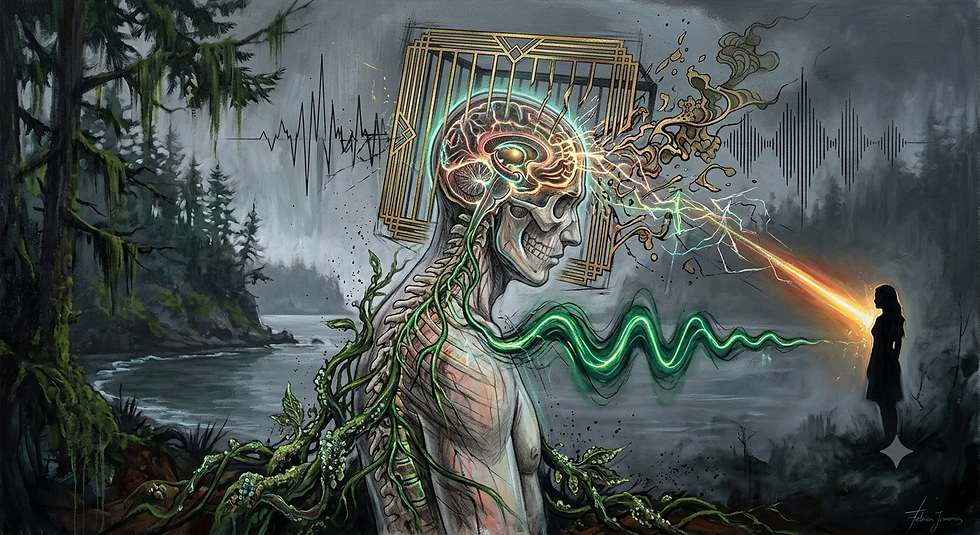
The ultimate hope for future healing lies in moving beyond the "single-molecule" pharmaceutical model. Biological evidence confirms that the "entourage" of natural alkaloids provides a quantitatively stronger therapeutic mechanism than synthetic isolates. While synthetic psilocybin primarily impacts only two key synaptic proteins in limited brain regions, whole-mushroom extracts have been shown to significantly increase all four major neuroplasticity markers—GAP43, PSD95, synaptophysin, and SV2A—across the entire brain, including the frontal cortex and striatum.
By unchaining these natural compounds from the high transaction costs of the illegal market, society can transition toward a biopsychosocial model of healing. This model recognizes that the most profound therapeutic outcomes—characterized by a sustained "reset" of the brain's Default Mode Network and a heightened sense of nature-relatedness—are best achieved through the complex, synergistic chemistry that Mother Nature has refined over 67 million years of evolution.
Integrating these diverse fungal alkaloids into a legal, institutional framework offers a transformative path for the millions of individuals currently unresponsive to conventional psychiatric care.