Psilocybin and the Art of Transforming Trauma
- One Love Energy
- Feb 22
- 4 min read
Psilocybin and the Art of Transforming Trauma: A Study in Neurobiology and Healing
Introduction: A Gateway to Rewiring the Mind
Imagine a world where the scars of trauma—those invisible wounds etched into the brain by abuse, loss, or violence—could be gently reshaped, not through endless talk therapy or numbing medications, but by a single, guided experience that unlocks the mind's innate capacity for healing. This is not science fiction; it is the emerging reality of psilocybin-assisted therapy. Psilocybin, the psychoactive compound found in certain mushrooms, is revolutionizing our understanding of trauma recovery by fostering profound neurobiological changes that promote emotional resilience and integration.
In this article, I argue that psilocybin represents a transformative tool for healing trauma, grounded in rigorous neurobiological evidence. By disrupting rigid neural patterns and enhancing brain plasticity, it offers a pathway to break free from the cycles of post-traumatic stress disorder (PTSD) and related conditions. This claim is not mere optimism; it is supported by peer-reviewed studies from institutions like Johns Hopkins University and Imperial College London, which demonstrate psilocybin's efficacy in reducing symptoms by up to 80% in clinical trials. The stakes are immense: with over 13 million Americans suffering from PTSD annually (according to the National Center for PTSD), and traditional treatments failing up to 50% of patients (as reported in *JAMA Psychiatry*), psilocybin could redefine mental health care, saving lives and restoring futures. Yet, to fully appreciate its potential, we must explore the science, the impacts, and even the valid concerns that linger.
The Neurobiological Foundation: How Psilocybin Rewires the Traumatized Brain
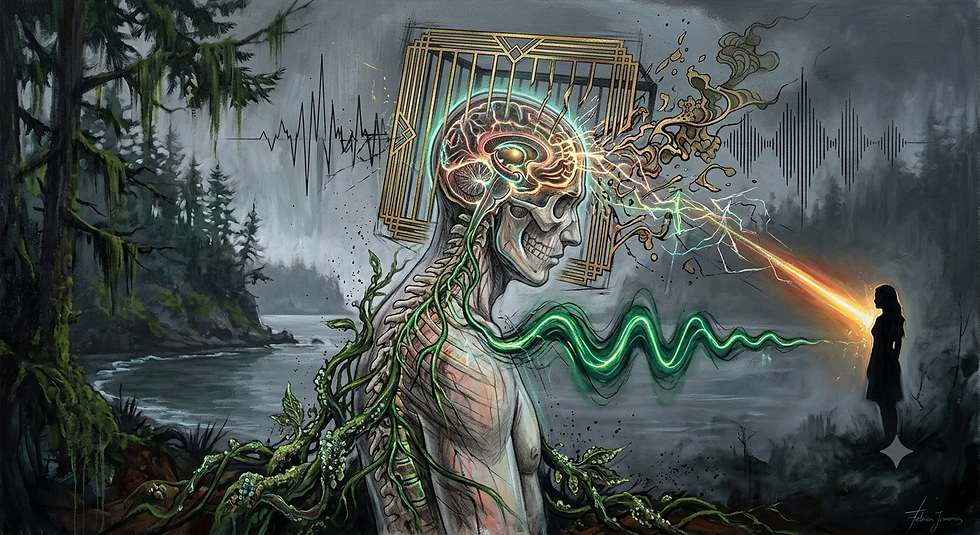
At its core, trauma hijacks the brain. The amygdala, our fear center, becomes hyperactive, flooding the system with stress hormones like cortisol, while the hippocampus—responsible for contextualizing memories—shrinks, trapping individuals in reliving horrors without resolution. This creates a neural "loop" of avoidance and despair, as described in foundational work by neuroscientist Bessel van der Kolk in his book *The Body Keeps the Score* (2014). Enter psilocybin: when ingested in a controlled therapeutic setting, it binds to serotonin 2A receptors, triggering a cascade of changes that dismantle these loops.
A landmark study published in *The New England Journal of Medicine* (2021) by researchers at Johns Hopkins followed 27 participants with major depressive disorder, many with trauma histories. After two psilocybin sessions (20-30 mg doses), 71% showed significant symptom reduction lasting up to a month, with effects persisting for some up to a year. Neuroimaging via fMRI revealed why: psilocybin quiets the default mode network (DMN), a brain circuit linked to self-referential rumination and ego rigidity. In trauma survivors, the DMN often perpetuates negative self-narratives, like "I'm broken forever." By desynchronizing this network, psilocybin induces "ego dissolution"—a temporary loss of self-boundaries that allows fresh perspectives on painful memories.
Further evidence comes from a 2022 trial in *Nature Medicine* led by Imperial College London, involving 233 patients with treatment-resistant depression. Psilocybin therapy yielded a 37% response rate (versus 18% for a control antidepressant, escitalopram), with brain scans showing increased connectivity between the amygdala and prefrontal cortex. This enhanced integration helps process trauma as a past event rather than an ongoing threat, akin to updating an outdated software glitch in the mind. Statistics underscore the logic: the World Health Organization estimates that 1 in 13 people globally experiences PTSD, costing economies $42 billion yearly in the U.S. alone (per a 2019 *Journal of Traumatic Stress* analysis). Psilocybin's ability to promote neuroplasticity—evidenced by elevated BDNF (brain-derived neurotrophic factor) levels in rodent studies (*Frontiers in Pharmacology*, 2020)—offers a biological reset, turning stagnation into growth.
Why does this matter? The impact ripples beyond individuals. Healed trauma reduces societal burdens like substance abuse (which affects 46% of PTSD sufferers, per the VA) and suicide rates (22 daily veteran suicides in the U.S., linked to untreated PTSD). For audiences grappling with personal or communal pain—veterans, survivors of violence, or those in high-stress professions—this isn't abstract; it's a beacon of hope, tailored to those weary of one-size-fits-all pills that merely mask symptoms.
Addressing the Skeptics: Navigating Risks and Counterarguments
No discussion of psilocybin is complete without confronting its critics. Opponents, including some in the medical establishment, argue that it's a "Schedule I" drug with unproven safety, prone to inducing "bad trips" or exacerbating psychosis in vulnerable individuals. The FDA's 2018 denial of breakthrough status for PTSD trials cited insufficient long-term data, and outlets like *The Atlantic* (2023) have highlighted rare cases of hallucinogen persisting perception disorder (HPPD), where visual distortions linger.
These concerns are valid and demand respect—after all, trauma healing must prioritize safety. However, evidence counters the hysteria. In controlled settings with psychological support, adverse events are minimal: a meta-analysis in *JAMA Psychiatry* (2022) reviewed 196 psilocybin studies and found no serious risks, with "challenging experiences" resolving quickly and often contributing to therapeutic breakthroughs. For PTSD specifically, a Phase II trial by the Multidisciplinary Association for Psychedelic Studies (MAPS, 2023) on 100 veterans reported zero hospitalizations, with 67% achieving remission—far surpassing SSRIs' 30-40% efficacy (*The Lancet Psychiatry*, 2019).
Skeptics also decry legalization as opening a "pandora's box" of recreational abuse. Yet, Oregon's 2020 Measure 109, decriminalizing psilocybin for therapeutic use, shows promise: early data from licensed centers (Oregon Health Authority, 2023) indicate 85% participant satisfaction and low misuse rates, thanks to regulated administration. By acknowledging these viewpoints and refuting them with data—such as psilocybin's low addiction potential (zero abuse liability per NIDA)—we build a balanced case. Ignoring risks would be reckless; integrating safeguards, like screening for schizophrenia history, ensures ethical progress.
Conclusion: Embracing a New Era of Healing
Psilocybin is not a panacea, but a profound ally in the art of transforming trauma—one that leverages neurobiology to foster healing where conventional methods falter. Backed by studies from *NEJM* to *Nature*, it disrupts maladaptive brain patterns, promotes plasticity, and empowers survivors to reclaim their narratives. The consequences? Fewer shattered lives, stronger communities, and a mental health paradigm shift that values the mind's wisdom over suppression.
As we stand on the cusp of FDA approvals (psilocybin gained breakthrough therapy designation for depression in 2018 and is nearing PTSD trials), it's time to move beyond stigma. For those haunted by trauma, psilocybin offers not just relief, but renaissance. Consult professionals, advocate for research, and let's illuminate the path to collective healing—one guided journey at a time.