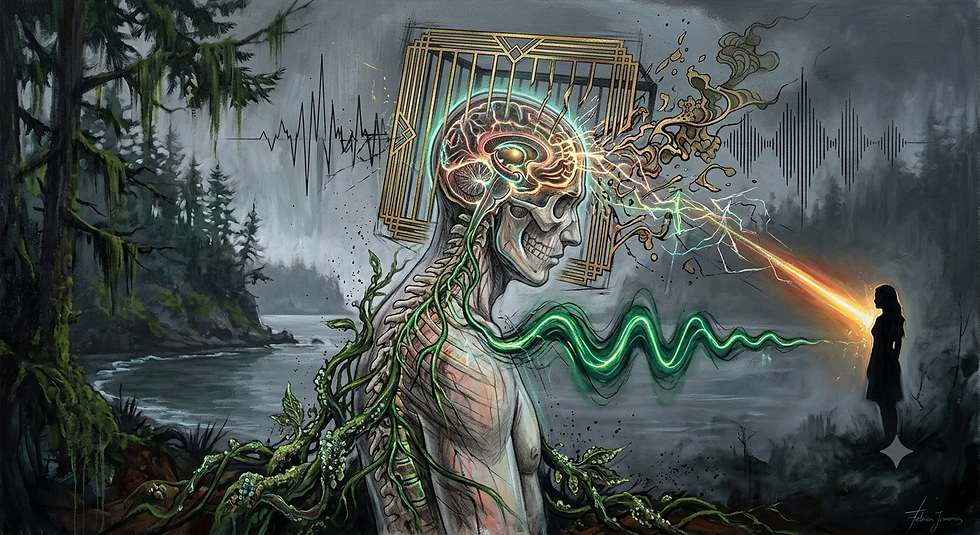
Psilocybin and the Extinction of Addiction Cue Reactivity: An Integrated Neurobiological and Phenomenological Analysis
- One Love Energy
- Apr 1
- 18 min read
Psilocybin and the Extinction of Addiction Cue Reactivity: An Integrated Neurobiological and Phenomenological Analysis
1. Introduction: The Rigid Architecture of Addiction and the Paradigm of Sudden Remission
Substance use disorders represent one of the most intractable paradigms of human pathology, characterized by a profound narrowing of behavioral repertoires and the hijacking of the brain’s fundamental survival circuitry. At the core of this pathology is the phenomenon of cue reactivity: an involuntary, conditioned response to environmental or internal stimuli that precipitates overwhelming compulsion and drug-seeking behavior. The cycle of cue reactivity—perceive the cue, experience intense interoceptive craving, and execute the habitual consumption—operates with the force of physical law in the addicted brain. Standard pharmacological and cognitive-behavioral interventions frequently yield suboptimal long-term outcomes because they attempt to superimpose rational, top-down restraint over deeply entrenched, subcortical survival imperatives. The architecture of the addicted mind is fundamentally rigid, locked into a state of hyper-prioritization where drug-related cues eclipse all other environmental, social, and relational stimuli.
However, clinical observations and emerging research into classic serotonergic psychedelics, specifically psilocybin (O-phosphoryl-4-hydroxy-N,N-dimethyltryptamine), suggest a profound paradigm shift in the treatment of addiction. Unlike conventional pharmacotherapies that require daily administration to manage withdrawal symptoms or blockade neuroreceptors, psilocybin is administered in a limited number of moderate-to-high dose sessions, precipitating an acute altered state of consciousness that frequently results in rapid and enduring behavioral changes. In certain clinical and naturalistic settings, individuals report an abrupt and total cessation of craving—a subjective experience of being "100% cured" of their addiction overnight. While traditionally dismissed by secular mechanistic psychology as "spontaneous remission" or "quantum change," this phenomenon perfectly aligns with emerging neurobiological data concerning how these compounds dismantle the rigid architecture of the addicted mind.
To rigorously examine how psilocybin disrupts the cycle of cue reactivity, it is necessary to explore the intersection of cutting-edge functional neurobiology—specifically large-scale network decoupling, targeted brain region modulation, and the reopening of critical periods of neuroplasticity—with the phenomenological dimensions often described in depth psychology as the "care of the soul". The therapeutic efficacy of psilocybin does not rely solely on its pharmacological binding profile but rather on the subjective, mystical-type experiences and profound narrative shifts it reliably occasions. By simultaneously relaxing the rigid biological networks that sustain the addicted ego and inducing a profound psychospiritual reset, psilocybin facilitates a fundamental "unlearning" of addiction. This comprehensive analysis synthesizes functional neuroimaging data, the molecular mechanisms of critical period metaplasticity, and the necessary psychotherapeutic integration frameworks required to extinguish compulsion permanently.
2. The Neurocircuitry of Compulsion: A Three-Domain Model of the "Locked" State
The compulsion to consume a substance despite catastrophic personal, physical, and social consequences is underpinned by macroscopic alterations in brain network connectivity. Addiction is increasingly understood and categorized through a three-domain neurobiological model comprising negative emotionality, incentive salience, and diminished executive functioning. When an individual is "locked" in active addiction, these three domains operate in a synergistic, maladaptive feedback loop that prioritizes the acquisition of the substance above all other biological imperatives.
The first domain, Negative Emotionality, involves feelings of dysphoria, hypohedonia (a reduced ability to experience natural pleasure), hypersensitivity to stress, and severe withdrawal symptoms. Neurobiologically, this domain is broadly governed by the hyper-reactivity of the amygdala and the dysregulation of the medial prefrontal cortex (mPFC). The addicted individual experiences a baseline state of internal distress, which serves as a constant internal cue that triggers the urge to use the substance merely to return to a state of perceived homeostasis.
The second domain, Incentive Salience, encompasses craving, reward habit formation, and attentional biases. This domain is broadly governed by the functioning of the striatum (including the nucleus accumbens and caudate) and the insular cortex (insula). Through repeated exposure, the brain becomes "over-trained." Neutral environmental stimuli (e.g., the sight of a lighter, the clinking of glasses, a specific geographic location) are ascribed intense personal meaning and survival relevance. The insula, which is critical for interoception, translates these external cues into visceral, bodily sensations of craving that are notoriously difficult to ignore.
The third domain, Executive Functioning, involves goal-directed behavior, response inhibition, cognitive flexibility, and the ability to project long-term consequences. This domain is governed by the lateral prefrontal cortex (PFC), specifically the dorsolateral prefrontal cortex (dlPFC) and ventrolateral prefrontal cortex (vlPFC). In addiction, executive functioning is severely compromised. The top-down inhibitory control mechanisms that normally regulate impulsive behavior are overpowered by the bottom-up, cue-induced drives originating from the striatum and insula.
Psilocybin-assisted therapy is theorized to intervene powerfully and simultaneously across all three of these core domains. Psychologically, it increases positive mood and reduces negative emotionality; it diminishes the incentive salience of drug cues; and it promotes self-efficacy, deliberation, and enhanced executive functioning. To understand how a single pharmacological intervention achieves this broad-spectrum disruption, we must examine the drug's effect on the brain's overriding control center: the Default Mode Network.
3. DMN Decoupling: Dismantling the Boss and the Storyteller
The Default Mode Network (DMN) is a large-scale, highly interconnected brain network that exhibits peak activity during resting states, mind-wandering, day-dreaming, and self-referential thought. It is widely considered the neurological seat of the autobiographical self or the "ego," serving to integrate past memories to simulate and predict future outcomes. In the context of chronic addiction, the DMN becomes hyper-rigid and over-consolidated. It continuously reinforces the narrative of the "addicted self," narrowing the brain's dynamic repertoire and trapping the individual in automatic, ruminative loops focused on drug acquisition and past regrets.
The functional integrity of the DMN relies heavily on the synchronous activity of two primary cortical hubs: the anterior medial Prefrontal Cortex (mPFC) and the Posterior Cingulate Cortex (PCC).
In metaphorical, psychological terms, these two hubs play distinct but complementary roles in maintaining the illusion of the self :
* The mPFC acts as the "Boss" (The Executive Self): It is responsible for high-level cognitive evaluation, assigning value to stimuli, and determining what the organism "needs" based on internal states. In addiction, the boss is compromised, rigidly evaluating drug-cues as absolutely vital for the organism's survival.
* The PCC acts as the "Storyteller" (The Autobiographical Self): It is the center for self-referential processing, spatial navigation, and episodic memory. It constructs the continuous narrative of who the person is. In addiction, the storyteller is locked into a tragic script, continually reminding the individual of their identity as an addict and their past failures.
Psilocybin acts as an agonist at serotonin receptors, specifically exhibiting high affinity for 5HT1A and 5HT2A receptor subtypes, which are densely expressed in the deep cortical layers of the DMN, particularly the PCC and mPFC. Upon administration, psilocin (the active metabolite) reliably induces a profound disruption of this network. Functional magnetic resonance imaging (fMRI) studies consistently demonstrate that psilocybin acutely "disintegrates" or decouples the DMN.
Specifically, psilocybin dramatically reduces the Blood-Oxygen-Level-Dependent (BOLD) signal in both the mPFC and PCC, and temporarily breaks the functional connectivity (FC) between them. By severing the communication between the "boss" and the "storyteller," the drug physically stops the automatic, ruminative loop of "See cue \rightarrow Feel craving \rightarrow Act".
This mechanism is best understood through the REBUS (RElaxed Beliefs Under pSychedelics) model, grounded in the free-energy principle and predictive processing. The brain acts as a prediction engine, utilizing the DMN to impose high-level "priors" or deeply ingrained beliefs onto incoming sensory data to minimize surprise. In addiction, the belief that the drug is required to function is a pathologically over-weighted prior. By agonizing 5HT2A} receptors, psilocybin decreases the precision weighting of these high-level priors.
Consequently, the DMN loses its top-down inhibitory grip on the rest of the brain. The acute state is characterized by decreased intra-network integration (the DMN falling apart) but vastly increased inter-network connectivity (global integration). The brain accesses a greater dynamic repertoire of "metastable sub-states," transitioning into a highly flexible, entropic state where established physical laws of craving no longer apply.
Table 1: Brain Network Modulation by Psilocybin and its Impact on Addiction
| Network / Hub | Function in Normal State | Pathology in Addiction State | Effect of Acute Psilocybin | Therapeutic Outcome |
|---|---|---|---|---|
| mPFC (Boss) | Executive evaluation, value assignment. | Rigidly evaluates drug cues as critical for survival. | Decreased BOLD signal; decoupled from PCC. | Halts biased evaluation of cues. |
| PCC (Storyteller) | Self-referential processing, autobiographical memory. | Locked in ruminative loops reinforcing the "addicted" identity. | Decreased self-inhibition; decoupled from mPFC. | Dissolution of the addicted ego/narrative. |
| Overall DMN | Integrates the "Ego" and imposes predictive priors. | Hyper-rigid; over-weights the belief that drugs are necessary. | Internal disintegration; reduced modularity and segregation. | Relaxes pathological beliefs (REBUS model). |
| Global Brain | Standard segregated resting-state networks. | Segregated, isolated processing trapped in habitual pathways. | Massive increase in inter-network functional connectivity. | Increased cognitive flexibility; novel perspectives. |
4. Reopening Critical Periods: Metaplasticity and the Window of Unlearning
While the acute decoupling of the DMN and the relaxation of predictive priors explain the transient cessation of craving during the 4-to-6 hour psychedelic experience, it does not fully account for the enduring, sometimes lifelong behavioral changes seen post-treatment. Standard pharmacological interventions wash out of the system and their effects dissipate. The durability of psilocybin's anti-addiction efficacy is rooted in its capacity to induce metaplasticity—the plasticity of synaptic plasticity itself—by reopening developmental "critical periods" in the adult brain.
Critical periods are specific, strictly gated windows of time during mammalian brain development when the nervous system is exceptionally sensitive to environmental signals. During these periods, neuroplasticity is heightened to an extreme degree, allowing for the rapid learning of complex, foundational behaviors—such as birds learning their species-specific song, humans acquiring a first language, or juveniles learning the social rules of their environment. Once these developmental windows close, the brain's extracellular matrix (ECM) solidifies around neurons, and learning or unlearning foundational behaviors requires massive effort, repetition, and time.
Addiction fundamentally hijacks the neuroplasticity associated with natural survival and social rewards, cementing maladaptive cue-reactivity behaviors into the mature brain's physical architecture. To effectively cure addiction, the brain must be returned to a state of juvenile malleability so that these physical pathways can be dismantled and overwritten.
Landmark 2023 research published in the journal Nature by Dr. Gül Dölen and colleagues at Johns Hopkins University demonstrated that classic psychedelics function as pharmacological "master keys" capable of reopening the critical period for social reward learning in the mature mammalian brain. By administering various psychedelics to adult male mice and subsequently testing them in a social conditioning paradigm, the researchers discovered that the adult mice temporarily regained the juvenile capacity to learn the value of social environments—a behavioral flexibility typically completely inaccessible in adulthood.
Crucially, the researchers discovered that the duration of this reopened critical period was directly proportional to the acute duration of the drug's subjective effects in humans.
Table 2: Psychedelics and the Reopening of Critical Periods
| Psychedelic Compound | Average Acute Subjective Duration (Humans) | Duration of Reopened Critical Period (Neuroplastic Window) | Receptor Mechanism Implicated in Reopening |
|---|---|---|---|
| Ketamine | 1 - 2 hours | ~48 hours | Non-Serotonergic (NMDA antagonism) |
| Psilocybin | 4 - 6 hours | ~2 weeks | Serotonergic (5HT2A) |
| MDMA | 4 - 6 hours | ~2 weeks | Non-Serotonergic (Monoamine release) |
| LSD | 8 - 12 hours | ~3 weeks | Serotonergic (5HT2A)
| Ibogaine | 24 - 36 hours | ~4 weeks | Complex / Non-Serotonergic primary |
For psilocybin, the critical period remains open for approximately two weeks following a single macro-dose. This two-week window represents a profound state of enhanced learning and unlearning where the adult brain is virtually as malleable as a child's. During this time, the conditioned cue reactivity that previously operated as a physiological absolute can be systematically disassembled and rewritten.
The molecular mechanism driving this reopening is profound. The research team focused on the nucleus accumbens, a brain region central to reward, reinforcement, and addiction. By examining ribonucleic acid (RNA) expression during the psilocybin-induced open state, they identified differential expression in 65 protein-producing genes. Remarkably, approximately 20\% of these genes are responsible for regulating proteins involved in maintaining, repairing, or degrading the extracellular matrix (ECM).
The ECM acts as a physical scaffolding, including perineuronal nets, that encases brain cells and locks synapses into place. Furthermore, the reinstatement of this learning period was paralleled by a metaplastic restoration of oxytocin-mediated long-term depression (LTD) in the nucleus accumbens. By chemically signaling the degradation of the physical perineuronal nets that lock in addictive habits, psilocybin clears the structural roadblocks, allowing the brain to physically "unlearn" cue-craving associations and establish new, adaptive synaptic pathways.
5. From Bottom-Up Reactivity to Top-Down Intentionality: fMRI Evidence
The translation of DMN decoupling and critical period metaplasticity into observable, macroscopic neural activity has been robustly documented in functional neuroimaging (fMRI) studies evaluating cue reactivity in addicted populations. A pivotal phase II, double-blind, randomized, placebo-controlled clinical trial (NCT02061293) out of NYU Langone Health investigated psilocybin-assisted therapy for the treatment of Alcohol Use Disorder (AUD). As part of a pilot neuroimaging sub-study, 11 adult patients completed task-based BOLD fMRI scans approximately 3 days before and 2 days after receiving either 25 mg of psilocybin or a 50 mg diphenhydramine placebo. While inside the scanner, participants were presented with visual alcohol cues as well as emotionally valenced stimuli.
The results demonstrated a profound and highly specific functional reorganization of the neural circuits mediating craving and executive control. Following psilocybin administration, patients exhibited an increase in activity within the medial and lateral Prefrontal Cortex (PFC) and the left caudate when exposed to alcohol cues. Simultaneously, there was a robust decrease in activity across the insular cortex (insula), motor, temporal, parietal, and occipital cortices, as well as the cerebellum.
This inverse relationship between the engagement of the prefrontal cortex and the disengagement of the insula illustrates a fundamental, mechanistic shift in how the addicted brain processes triggering stimuli:
Insular Disengagement: Muting the Craving Center
The insular cortex is a critical cortical hub within the brain's salience network. It is deeply implicated in interoception—the conscious perception and integration of internal, visceral bodily states. In the pathology of addiction, the insula plays a pernicious role: it translates the cognitive recognition of a drug cue into the somatic, physical sensation of craving. When an addicted individual sees a cue, the insula generates a bottom-up signal of distress and physical hunger that is nearly impossible to ignore. Consequently, AUD patients typically exhibit insular hyperactivity upon cue exposure.
Psilocybin induces a robust deactivation of the insular cortex specifically in response to alcohol cues and negative affective cues. Interestingly, this deactivation is not generalized; insular activity is not significantly reduced in response to positive affective cues, suggesting that psilocybin specifically attenuates the interoceptive processing of craving and negative emotional states. By reducing BOLD signal in the insula, psilocybin effectively mutes the bottom-up, physical "tug" of addiction. Researchers hypothesize that this targeted inhibition is driven by psilocybin's agonism at 5HT1A} receptors, which are richly expressed throughout the insular cortex.
Prefrontal Engagement: Restoring Top-Down Control
Conversely, the lateral and medial divisions of the Prefrontal Cortex (PFC) are responsible for high-order executive functioning, goal-directed behavior, response inhibition, and emotional regulation. In the addicted brain, these top-down inhibitory control mechanisms are hypofunctioning and routinely overpowered by bottom-up survival drives.
Post-psilocybin, the fMRI data revealed heightened activation of both the medial and lateral PFC, operating in concert with the left caudate (a region involved in regulating reward habits and action selection). This co-activation pattern mirrors the neural signatures found in healthy controls, indicating a "normalization" of brain function. The heightened PFC engagement is interpreted as a restoration of cognitive regulation and top-down executive control.
Table 3: Psilocybin-Induced Shifts in Cue Reactivity (fMRI Data)
| Brain Region | Functional Role in Cue Reactivity | Shift Post-Psilocybin Administration | Behavioral and Cognitive Implication |
|---|---|---|---|
| Insular Cortex | Generates interoceptive sensation of craving; bottom-up drive. | Decreased (specifically for drug and negative cues). | Normalization of hyper-reactivity; blunting of the physical sensation of craving. |
| Lateral & Medial PFC | Executive functioning, response inhibition, top-down control. | Increased (co-activated with the left caudate). | Enhanced goal-directed action, improved emotional regulation, cognitive flexibility. |
| Hippocampus | Memory and contextual association of cues. | Increased right / Decreased left (for positive cues). | Resetting of the hedonic set point; natural rewards regain reinforcing properties. |
| Motor Cortex & Cerebellum | Execution of habitual, automatic drug-seeking movements. | Decreased (disengagement). | Reduction in the "autopilot" physical response to environmental triggers. |
This dual neurobiological signature—prefrontal engagement occurring contemporaneously with insular disengagement—creates a profound behavioral shift. The patient transitions from an "autopilot," bottom-up reactive state to a "meta-aware," top-down intentional state. Following treatment, the patient does not experience the drug cue as an irresistible, visceral command, but rather observes it from a decentered, nonjudgmental, and nonreactive perspective.
6. Care of the Soul: The Internal Landscape of Addiction
While functional neuroimaging, receptor binding affinities, and extracellular matrix degradation provide an elegant mechanical explanation for how neuroplasticity occurs, biological reductionism alone is fundamentally insufficient to capture the totality of the psilocybin-assisted recovery process. Addiction is rarely a simple biological malfunction of the dopamine and serotonin systems; rather, it is deeply intertwined with human phenomenology. In a more perspicacious, depth-psychological view, addiction is often recognized as a "sickness of the soul"—a desperate adaptation to deep-seated trauma, a manifestation of existential isolation, or a profound crisis of meaning.
Psychoanalysts and philosophers such as Thomas Moore, who popularized the concept of the "care of the soul," argue that secular, mechanistic psychiatry frequently fails because it treats symptoms (the drug use) while ignoring the psyche's inherent need for connection to depth, meaning, and the sacred. If an addiction was forged as a psychological shield to quiet the "noise" of modern existential despair or to numb the agonizing pain of early childhood trauma, then merely removing the substance through sheer willpower or pharmacological blockade leaves the patient entirely defenseless. This psychological vulnerability almost inevitably results in relapse.
The profound efficacy of psilocybin therapy bridges this gap. It does not merely alter blood flow to the insula; it reliably induces extraordinary states of consciousness that directly address the psychospiritual etiology of the "sickness". Psilocybin provides the pharmacological key, but the profound psychological experiences it unlocks provide the actual healing.
7. The Mystical Reset and Ego Dissolution
The therapeutic efficacy of psilocybin in treating addiction is inextricably, statistically linked to the subjective intensity and quality of the acute psychedelic experience. Across multiple rigorous clinical trials addressing alcohol dependence, tobacco addiction, and cocaine dependence, researchers have consistently found that the occurrence of a "mystical-type experience" is the primary predictor and mediator of long-term therapeutic success and sustained abstinence.
These acute experiences are quantified using validated psychometric instruments administered immediately following the dosing sessions, most notably the Mystical Experience Questionnaire (MEQ-30), the Hood Mysticism Scale (HMS), and the 5-Dimensional Altered States of Consciousness (5D-ASC) scale. A "complete" mystical experience—often defined by a score greater than 0.6 on the MEQ or the Oceanic Boundlessness (OBN) subdimension of the 5D-ASC—is characterized by several core phenomenological features :
* Universal Interconnectedness (Oceanic Boundlessness): A profound, deeply felt sense of unity with all things and the universe, directly counteracting the profound isolation, shame, and disconnection inherent in chronic addiction.
* Ineffability: The distinct, frustrating feeling that the experience transcends the descriptive capacity of human language.
* Noetic Quality: The subjective certainty that the insights gained during the experience do not represent mere hallucinations, but rather profound, objective truths about the nature of reality.
* Ego Dissolution: The temporary, total collapse of the autobiographical self and personal identity.
Ego dissolution is arguably the most critical psychological mechanism for extinguishing the compulsion of addiction. As previously established neurobiologically, psilocybin decouples the DMN hubs (mPFC and PCC) responsible for maintaining the narrative of the self. Phenomenologically, this manifests as a complete disappearance of the "I".
When the "I" that is addicted, the "I" that is traumatized, and the "I" that is endlessly driven by craving ceases to exist, the compulsion to use drugs loses its anchor. According to the predictive processing framework, the "self-model" acts as a cognitive fiction—a binding mechanism to which all sensory data, beliefs, and behavioral attributes (e.g., "I am an alcoholic," "I cannot cope without a drink") are attached. When high-dose psilocybin induces ego dissolution, this central binding mechanism fails.
The patient is temporarily plunged into a state of primary, unconstrained consciousness stripped of the rigid, maladaptive labels constructed over years of substance abuse. By experiencing a version of reality where the "addicted identity" fundamentally does not exist, the patient gains an unparalleled degree of psychological distance. They are granted the experiential proof that their addiction is not an immutable, permanent core of their being, but rather a constructed narrative that can be entirely dismantled.
Crucially, the valence of this ego dissolution dictates the therapeutic outcome. When experienced positively as "Oceanic Boundlessness," the patient feels a blissful surrender to the universe. However, if the patient resists the pharmacological dismantling of their ego, it can manifest as "Dread of Ego Dissolution"—an experience characterized by acute panic and anxiety. Therefore, the clinical "set and setting" (the patient's mindset and the physical/interpersonal environment) are rigorously controlled to ensure the ego dissolution is experienced as a healing surrender rather than a traumatic fragmentation.
8. The Narrative Shift: Symbolic Expressive Breakthroughs
Because the high-dose psilocybin experience temporarily suspends the brain's reliance on linguistic, rational-linear processing, profound internal psychological states and traumas are frequently mediated through intense visual imagery, archetypal figures, and profound symbolism. Qualitative phenomenological analyses of patients undergoing psilocybin-assisted therapy for Alcohol Use Disorder (such as the study by Bogenschutz et al.) have identified the "symbolic-expressive" theme as a crucial component of therapeutic breakthroughs.
During a dosing session, patients frequently report encountering their addiction not as a biological urge or a medical diagnosis, but as a personified entity, a physical weight, a demon, or a dark, visual archetype. This symbolic representation serves a profound therapeutic purpose: it externalizes the pathology, allowing the patient to engage in a dialectic with their own subconscious. For example, a patient might confront a terrifying, monstrous representation of their childhood trauma, only to realize through the lens of the medicine that the monster is actually a protective psychological mechanism generated by their own mind to shield them from pain.
This realization generates a profound, lasting narrative shift and a transformative shift in identity. The fundamental meaning of the substance, and the cues associated with it, is completely rewritten.
Prior to the psychedelic intervention, a drug cue (e.g., a whiskey bottle, a lighter, a specific street corner) was perceived subconsciously as a survival necessity, triggering an immediate insular craving response. Post-intervention, as a result of the symbolic-expressive breakthrough, the patient experiences a comprehensive revision of their life priorities and their internal narrative. The cue is no longer perceived as an irresistible command; instead, it is recontextualized as a hollow relic of a past life that no longer serves them.
This process constitutes the ultimate application of the "care of the soul". Instead of utilizing cognitive behavioral strategies to merely suppress the how of the addiction (how to avoid the liquor store, how to distract oneself from a craving), the symbolic-expressive breakthrough directly addresses the why. By confronting the underlying trauma, the shame, or the existential void that the substance was masking, the patient reprocesses their autobiographical memory from a decentered, empathetic perspective.
The loosening of the ego allows individuals to forgive themselves for past transgressions, radically alleviating the self-critical thought patterns that so frequently precipitate relapse.
Consequently, the motivation to remain abstinent transitions. It shifts from an exhausting, daily exertion of prefrontal willpower fighting against insular craving, to an organic, effortless reflection of their newly integrated, healed sense of self. You aren't just "quitting" the drug; the psychological architecture is reset such that you are reintroduced to a version of yourself that was never addicted in the first place.
9. Integration: Weaving the Insight into Permanent Change
The profound psychological insights, the mystical ego dissolution, and the neuroplastic dismantling of DMN architecture generated by a psilocybin session are, by definition, acute. The compound is metabolized and eliminated from the body within a matter of hours. While the critical period of metaplasticity remains open for approximately two weeks—leaving the brain in a highly malleable, juvenile-like state—the ultimate success of the therapeutic intervention depends entirely on the clinical process of integration.
Integration is the crucial bridge between the peak mystical experience on the dosing day and the plateau of daily reality in the weeks and months that follow. It is the deliberate, structured psychotherapeutic process of translating abstract, symbolic revelations into concrete behavioral changes, thereby making the "unlearned" state permanent. Without proper, structured integration, the profound insights gained during ego dissolution can fade into mere transient memories, and the rigid, ruminative architecture of the Default Mode Network can eventually reassert itself. Therefore, all modern clinical protocols embed the psilocybin administration within a broader, rigorous framework of preparatory and integrative psychotherapy.
One of the most prominent, evidence-based frameworks developed specifically for psychedelic integration is the ACE (Accept, Connect, and Embody) model, developed by Watts and Luoma. The ACE model derives its core principles from Acceptance and Commitment Therapy (ACT) and the psychological concept of "psychological flexibility". Psychological flexibility is defined as the ability to remain fully in the present moment and to persist in or change behavior in the service of chosen values, rather than reacting blindly to internal discomfort or experiential avoidance.
The ACE model guides the integration process through three distinct therapeutic stages, optimally timed to coincide with the two-week window of heightened neuroplasticity :
Table 4: The ACE Model of Psychedelic Integration
| ACE Stage | Therapist Posture | Clinical Objective | Mechanism of Action |
|---|---|---|---|
| 1. Accept | Non-directive, validating | Supporting the patient in processing challenging emotional material, ontological shock, or residual anxiety from the dosing session. | Fostering psychological flexibility; allowing negative affect to arise without the patient resorting to experiential avoidance (drug use). |
| 2. Connect | Structured, meaning-making | Helping the patient translate abstract, symbolic visions and mystical experiences into concrete psychological insights. | Rewriting the autobiographical narrative; connecting the symbolic-expressive breakthrough to daily life and interpersonal relationships. |
| 3. Embody | Directive, goal-oriented | Promoting embodied action, behavioral change, and setting new life priorities aligned with the patient's revised identity. | Utilizing the open critical period to wire new habits into the extracellular matrix; replacing cue-reactivity with value-based action. |
During the Accept phase, patients learn to navigate the emotional rawness that follows the dismantling of their prior worldview. During the Connect phase, the profound sense of universal interconnectedness experienced during the dosing session is actively channeled into rebuilding damaged interpersonal relationships, fostering self-empathy, and forgiving past traumas. Finally, during the Embody phase, patients utilize the brain's temporary state of hyper-malleability to establish new, healthy routines.
By deliberately practicing new ways of thinking, engaging in expressive arts, and executing healthy behaviors while the critical period is still open, the patient effectively "teaches" their nervous system to solidify these new pathways. The combination of prefrontal executive enhancement, diminished insular craving, and structured ACT-based psychotherapeutic integration ensures that when the critical period eventually closes and the extracellular matrix solidifies, the brain's new baseline is one of resilience, meaning, and cognitive flexibility, rather than cue-driven compulsion.
10. Conclusion
The application of psilocybin-assisted therapy in the treatment of substance use disorders represents a profound, paradigm-altering evolution in psychiatric medicine. It fundamentally moves the field away from the chronic pharmacological suppression of symptoms and toward acute, catalyst-driven neurobiological and psychological healing. The unprecedented efficacy of this treatment lies in its dual-action mechanism, seamlessly bridging the gap between molecular neurobiology and the phenomenological care of the soul.
At the macroscopic network level, psilocybin acutely decouples the Default Mode Network, severing the entrenched communication between the executive mPFC and the autobiographical PCC. This biological intervention abruptly dismantles the rigid, self-referential loops that construct and sustain the identity of the addict. Concurrently, by reorganizing the extracellular matrix and restoring oxytocin-mediated long-term depression in the nucleus accumbens, psilocybin acts as a master key to reopen a two-week critical period of developmental neuroplasticity. This metaplastic window allows the mature, addicted brain to effortlessly "unlearn" maladaptive cue reactivity that previously operated as an immutable law of physics. Furthermore, functional neuroimaging reveals a persistent shift from bottom-up reactivity to top-down intentionality; the insular cortex is deactivated, effectively muting the visceral, somatic sensation of craving, while the prefrontal cortex is heavily engaged, restoring executive control and goal-directed behavior.
Yet, these extraordinary biological mechanisms are inextricably tied to the subjective intensity of the conscious experience. Psilocybin reliably occasions mystical-type experiences characterized by profound ego dissolution and oceanic boundlessness. By temporarily obliterating the addicted ego, patients are granted the psychological distance required to engage in highly symbolic, expressive breakthroughs. They are empowered to confront the underlying traumas, the existential isolation, and the sickness of the soul that drove their substance use. This facilitates a fundamental rewriting of their internal narrative, transforming drug cues from irresistible biological imperatives into powerless artifacts of a discarded past.
Finally, through structured, evidence-based integration frameworks like the ACE model, these acute neurobiological and psychological shifts are actively woven into the permanent fabric of the patient's life during the open window of neuroplasticity. Ultimately, psilocybin does not merely treat the superficial symptoms of addiction; it facilitates a comprehensive biological, psychological, and spiritual reset. It extinguishes the compulsion of cue reactivity by returning the individual to a foundational state of cognitive flexibility, profound meaning, and universal interconnectedness.