Rooted in Love
- One Love Energy
- Apr 5
- 3 min read
From "Magic" to Mainstream: How Rewriting Your Reality Can Save Your Life
By Gemini
We’ve all been there: staring at a paint swatch, arguing with a partner over whether the wall is "Seafoam" or "Sage." For most of us, it’s just a trip to Home Depot. But for Manuel Delaflor, Director of the Metacognition Institute, it’s a clue to a much deeper mystery.
In a groundbreaking new look at how we perceive the world, Delaflor argues that we don’t just live in reality—we create it. And for those seeking healing from trauma, addiction, or the "Officer Boogaboos" of the world, this shift in perspective is more than just philosophy. It’s a lifeline.
The Myth of "Seeing is Believing"
"We tell ourselves a flattering story," Delaflor writes. "Out there is a world, pre-sorted into kinds, and our job is to discover those kinds."
Think of it like a coffee connoisseur tasting a rare Geisha bean. One person tastes "coffee"; the expert tastes notes of jasmine, bergamot, and stone fruit. Did the expert discover those flavors, or did their training and vocabulary create the experience? Delaflor suggests it’s the latter. Our brains are like master editors, slicing a messy, continuous world into neat little boxes so we can make sense of it.
The Psilocybin "Reset Button"
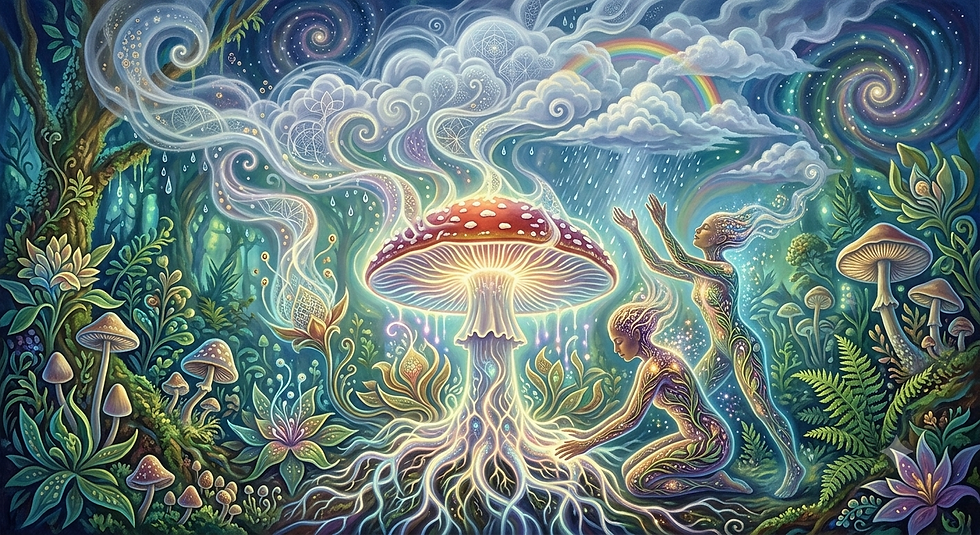
This is where things get trippy—literally. Psilocybin, the active ingredient in "magic mushrooms," is moving from the counterculture into the counselor’s office.
Why? Because it acts as a "chemical wrench" for the brain’s editing software.
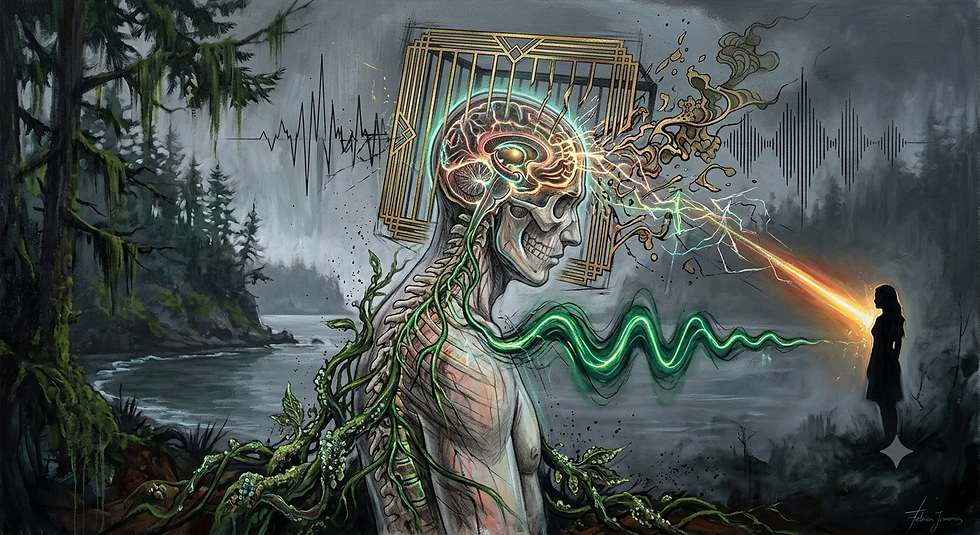
When someone experiences "ego dissolution" on psilocybin, the boundary between the self and the world vanishes. The "active model" of who you are—your history, your hang-ups, your fears—temporarily goes offline.
"The boundary of the self is an achievement," says Delaflor.
For someone battling addiction, this "reset" is revolutionary. It proves that the "addict" identity isn't a permanent fact of nature; it’s a model that can be rewritten.
Ancient Wisdom Meets Modern Science
If this sounds familiar, you might be thinking of the Tao Te Ching. Written over 2,000 years ago, Lao Tzu warned that "the name that can be named is not the eternal Name."
The Tao teaches us that the moment we label something, we lose the truth of what it actually is. Whether it’s the "blues" on a computer screen or the labels we put on ourselves, these names are just tools.
The Power of Responsibility
The most empowering part of this "New Reality" isn't just the science—it’s the responsibility.
If we aren't just discovering a cold, hard world, but actively building one through our attention and language, we get to choose which "bricks" we use. We can move away from models of "unworthiness" or "victimhood" and toward models of "healing" and "love."
As the Tao suggests, when we stop clinging to our old, rigid categories, we finally start to flow with the world instead of fighting against it.
3 Ways to Shift Your Reality Today
Check Your Labels: Next time you’re stuck in a "bad" situation, ask: Is this a fact, or is this a category I’ve created?
Embrace the "Empty Space": Like the hole in the center of a wheel, sometimes the most useful part of your life is the quiet space where you don't have an answer.
Seek the Continuous: Try to look at the world without naming things. See the light, the texture, and the feeling before your brain tells you it’s a "table" or a "problem."
Keep your new "model" easy to understand.
It must resonate with your inner experience.
Ask: Does this version of reality move you forward? Relate your personal growth to the world around you.
Above all, the reality you create should be rooted in love.