Shattering the Starving Brain: The Biological Case for Legal Psilocybin Integration
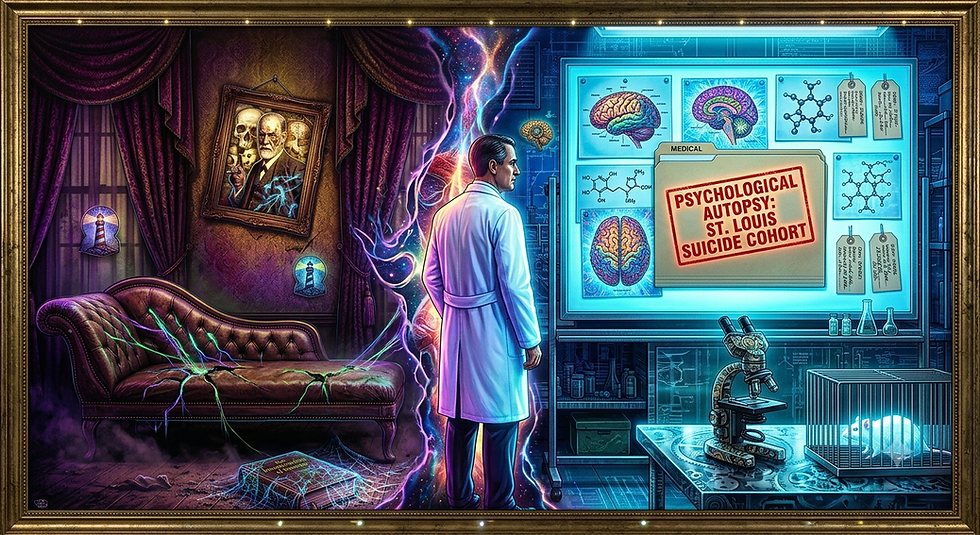
The Synaptic Snow Globe: A Limbic Vision of the Starving Brain
To understand anorexia nervosa through a purely behavioral lens is to gaze at the surface of a frozen lake and ignore the crushing depths below. It is not merely a disorder of the mind; it is an allostatic trap. It is a fortress built by the brain to survive what it perceives as an existential threat.
When we examine the potential of psilocybin to dismantle this fortress, we must descend into the deep architecture of starvation, where endocrinology and neurobiology lock together in a rigid, self-sustaining loop.
The Endocrine Fortress
In the anorexic state, the body’s metabolic language is silenced by chronic stress. As adipose tissue vanishes, leptin—the hormone of satiety and energetic security—plummets. In response, ghrelin screams into the void, a biological klaxon demanding caloric intake.
Yet, the anorexic brain mounts a paradoxical defense. The hypothalamic-pituitary-adrenal (HPA) axis becomes hyperactive, flooding the system with cortisol. This chronic state of sympathetic arousal transforms the biological drive to eat from a source of reward into a source of profound, limbic terror. The body is starving, but the brain is fighting a war, viewing food not as nourishment, but as a loss of control that threatens survival.
The Neurological Lockdown
Under the weight of this endocrine collapse, the brain’s networks ossify. The Default Mode Network (DMN)—the seat of the ego, rumination, and self-referential thought—becomes hyper-connected and aggressively rigid. It traps the consciousness in an endless, black-and-white cognitive spiral.
Simultaneously, the insula, the cortical gateway to interoception (our ability to feel hunger, cold, and somatic emotion), goes dark. The "thinking brain" erects a cognitive firewall, effectively severing the conscious self from the physical form. The language of pain is trapped beneath the ice.
Enter the Botanical Catalyst
When the fungal molecule psilocybin is ingested, it is rapidly dephosphorylated into psilocin (4-HO-DMT), a potent botanical key designed to fit the human brain's serotonin architecture. Psilocin crosses the blood-brain barrier and binds with high affinity to the 5-HT2A receptors, which are densely clustered on the layer V pyramidal neurons of the neocortex.
This binding acts as a profound disruptor to the brain's established hierarchy.
The immediate effect is cortical desynchronization. The rigid tyranny of the DMN fractures—the "snow globe" is violently shaken. Entropy floods the system, allowing brain regions that have been segregated for decades to communicate directly.
The insula wakes up, forcing the cognitive brain to suddenly process the somatic reality of the starving body. The emotional numbness shatters.
The Allostatic Reset
Below the electrical storm of the neurons, a deeper biochemical shift begins. 5-HT2A agonism triggers a cascade of intracellular signaling that results in a massive release of Brain-Derived Neurotrophic Factor (BDNF).
Here, the supporting architecture of the brain—the astrocyte networks—likely plays a vital role. By modulating the synaptic cleft and regulating calcium waves, astrocytes help translate this chemical surge into physical structural changes. Dendritic spines begin to sprout; synapses that were pruned by chronic stress are reborn. The brain enters a window of profound neuroplasticity.
This is the physiological basis of an allostatic reset. The psilocybin provides a transient window where the HPA axis can be recalibrated, and the deep limbic trauma driving the compulsive behavior can be re-contextualized without the paralyzing interference of the amygdala's fear response.
The Terrain of Integration
Anorexia nervosa carries the highest mortality rate in psychiatry and routinely defies conventional treatment. Keeping psilocybin illegal traps vulnerable patients in a cycle of institutional failure.
Legalization is an urgent necessity for science policy reform, dismantling archaic barriers to offer a legitimate pathway to shatter the rigid, self-sustaining loops of starvation.
Crucially, legalization establishes a framework for rigorous botanical genetics and standardized cultivation. Underground access introduces dangerous variables into a delicate neurobiological intervention.
Unregulated mushrooms cannot guarantee the precise biochemical potency required for a safe allostatic reset. Regulation ensures access to the stable, high-quality 5-HT2A agonists required to induce a vital neuroplastic window.
But exceptional botanical medicine is only the genesis of healing; the true crucible of recovery is clinical integration.
Psilocybin-induced neuroplasticity leaves the brain in a state of chaotic vulnerability. Legalization permits the necessary development of wrap-around integration therapy.
Without a trained therapist to contextualize the shattering of the Default Mode Network and the sudden reawakening of somatic sensations, the experience risks re-traumatizing the patient. Professional scaffolding is what directs new dendritic connections toward sustainable coping mechanisms.
Shifting psilocybin from a prohibited substance to an integrated clinical tool marks a fundamental evolution in treating entrenched disorders. It marries the biological disruption of a high-quality botanical agent with the structural support of professional therapy.
This comprehensive model ensures patients are not abandoned during the terrifying thaw of their cognitive rigidities, but are instead supported by a legally protected system designed to restore their somatic reality and agency.
Anorexia turns the mind and body into a prison, stripping away the capacity for joy, connection, and basic physical intuition. Legalizing psilocybin allows sufferers to permanently break the exhausting cycle of rigid cognitive control, re-engage with their natural bodily cues, and rebuild a life defined by genuine connection and sustainable healing rather than constant behavioral management.