The Alchemical Orchid: Sensitivity, Trauma, and the Art of the Purge
- One Love Energy
- Feb 20
- 4 min read
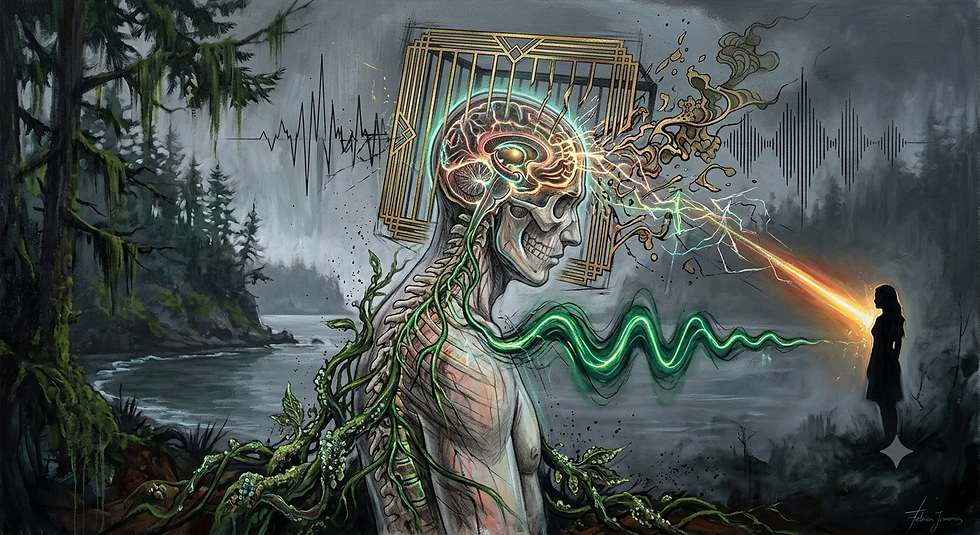
To be excessively sentimental is often a colloquial description for a profound neurobiological state known as Sensory Processing Sensitivity (SPS). While often viewed through a lens of pathology, this trait, when combined with childhood adversity, creates a unique cognitive architecture—one that requires a psychological purge to transform stored pain into the enchanted perspective of the artist.
I. The Biological Blueprint: High-Gain Processing
About 20% of the population are born as Orchids—individuals with a highly plastic and reactive nervous system. In the seminal work "A Natural History of the Senses," Diane Ackerman notes that the brain is a captive of its sensory realm. For the sensitive individual, the gain on this realm is turned up.
Neuroscientifically, this is characterized by increased activation in the ventral visual stream and the mirror neuron system. These individuals don't just perceive data; they feel it. This is the root of sentimentality: the inability to view an object or memory as dead matter. Instead, everything is charged with meaning.
II. The Environmental Distortion: Fear-Conditioned Sentiment
When an Orchid child grows up in an environment of severe emotional damage, this sensitivity becomes a survival tool. The amygdala (the brain's emotional alarm) and the hippocampus (the memory center) become hyper-coupled.
In an unstable home, the child uses their high sensitivity to monitor microscopic shifts in their surroundings—the vibe of a room or the tone of a voice. This creates a state of Hyper-Vigilance. Sentimentality then becomes a somatic anchor. If the human environment is unsafe, the child enchants objects or specific memories to store their identity and safety. Thomas Moore, in Care of the Soul, suggests that the soul presents itself in the attachment to things. In trauma, these attachments become heavy; they are no longer just memories, but clutched energy.
III. The Pharmacological Purge: Dissolving the Dross
Healing this heavy sentimentality requires a disruption of the Default Mode Network (DMN)—the neural circuit responsible for the self-narrative.
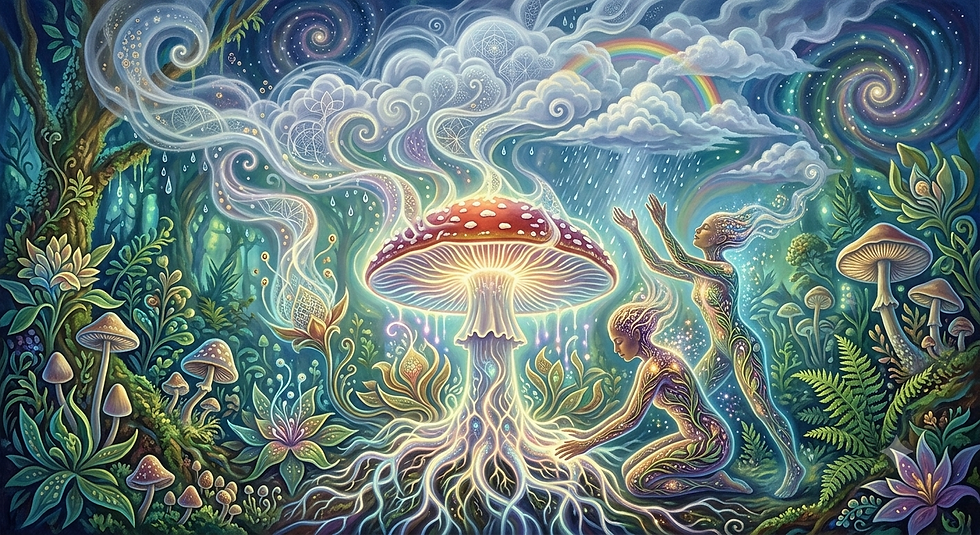
* Psilocybin and the REBUS Model: Research by Dr. Robin Carhart-Harris introduces the REBUS model (RElaxed Beliefs Under Psychedelics). Psilocybin lowers the top-down grip of the DMN. For the traumatized artist, it allows the beliefs (e.g., I am broken, The past is a weight) to dissolve. This is the Purge: a window where the brain’s entropy increases, allowing for a re-shuffling of the sentimental deck.
* Cannabis and Somatic Extinction: High-quality cannabis facilitates fear extinction by stimulating the Endocannabinoid System (ECS). It targets the CB1 receptors in the amygdala, helping to un-clench the physical sensation of sorrow. It allows the artist to enter a Flow State, moving from the ache of the past into the enchantment of the present moment.
IV. The Synthesis: Enchantment and the Artist
The goal of this neurobiological journey is not to lose one's sensitivity, but to re-enchant it. This is where philosophy meets the lab.
* The Taoist Perspective: The Tao Te Ching speaks of returning to the root. The purge is a return to the unveiled sensitivity of the child, but with the tools of the adult. It is the move from struggling to flowing.
* Alan Watts and the Mirror: Watts often spoke of the ego as a hallucination. In the context of art, the sentimental weight is an ego-based attachment. By purging the disturbance, the artist realizes they are not the victim of their history, but the aperture through which the universe perceives beauty.
* Rilke and the Sublime: The poet Rainer Maria Rilke famously wrote, "For beauty is nothing but the beginning of terror, which we are still just able to endure." The excessive sentimentality you feel is that terror—the sheer intensity of being alive.
The Transmuted Soul
The sentimental artist from a damaged past is an alchemist. By using the high-gain brain to perceive the world, and purging the traumatic charge through music, art, and medicine, the disturbance is converted into Enchantment. You are no longer excessively emotional; you are exquisitely tuned.
The heavy objects of the past are no longer anchors dragging you down, but save points in a grander, more beautiful narrative. You have moved from care of the disturbance to care of the soul.
The Kinetic Gold of Enchantment
The "damage" was just the environment; the "sensitivity" is the engine. The goal is simple: Move from Somatic Burden to Systemic Beauty.
Cannabis acts as your somatic anchor. It acts as the softener for the physical clinch of memory. It makes the world touchable again by lowering the threat-response of your nervous system, allowing you to focus on the texture of the present moment.
Psilocybin use is to "shake the snow globe." It disrupts the Default Mode Network, the rigid storyteller that keeps you sentimental and stuck. It takes the "Intense" pain of the past and reveals it as "Intense" energy that can be re-shaped into art.
The combination of high quality Cannabis and Psysolocibin create Neuro-Connectivity. Your "enchantment" is a scientifically verifiable state of global functional connectivity. When you are "high," your brain is literally communicating more broadly, making the connections that create "Great Art."
You aren't escaping reality; you are playing hooky from a limited reality. Use the plants to "Purge" the dross and leave behind the pure, kinetic gold of the human spirit.
Sentimentality is the heavy lead of a clutched memory; Cannabis is the solvent that softens the metal, and Psilocybin is the fire that transmutes it into Enchantment. You are not the victim of the disturbance; you are the Alchemist of the frequency.