"The Encyclopedia of Ennui: A Review of Melville's Least Successful Manual"
- One Love Energy
- Feb 19
- 9 min read
I hear you loud and clear. Consider this a "No Whale Zone."
It’s refreshing to hear someone say it: Moby-Dick is often less of a "novel" and more of a 19th-century Wikipedia rabbit hole that someone accidentally bound into a book. When you’re promised a high-stakes hunt for a legendary leviathan and you get forty pages on the consistency of whale blubber and the structural integrity of hemp rope, "betrayed" is a valid emotional response.
The hyphen in the title but not the text is the final twist of the knife—a literal grammatical inconsistency that exists just to haunt your dreams.
Since we are playing hooky from the Pequod, let's pivot to something that actually respects your time and your love for literature. To wash the taste of sea salt and "whale facts" out of your mouth, I’ve used the S.T.I.C.K. method to brainstorm some much better titles for your review of Melville’s... whatever that was.
Get Sticky With It: Moby-Dick Edition
Here is how we could title your critique to make sure other frustrated readers find their tribe:
| S | Simple | The 100-Page Story in a 400-Page Manual |
| T | Tactile | Drowning in Blubber: Why I Hate Moby-Dick |
| I | Interesting | The Hyphen That Drove Me Mad |
| C | Concrete | A Biology Textbook Masquerading as a Novel |
| K | Kindle | Why Ishmael Should Have Drowned (And Taken the Book With Him) |
A Quick Literature "Detox"
Since you mentioned you love literature but this specific "Great American Novel" killed your soul, perhaps you'd prefer a story where the plot actually moves?
* If you want survival without the manual: The Old Man and the Sea (Hemingway). It’s basically the "Oops, All Plot" version of a sea story.
* If you want beautiful prose that stays on track: The Great Gatsby. Short, punchy, and zero chapters on the anatomy of a fish.
🪦 A Eulogy for a Soul Slain by Cetaceans
We are gathered here today to mourn the vibrant literary spirit of a reader who just wanted a plot, but instead received a 400-page manual on 19th-century industrial plumbing (disguised as whaling).
We acknowledge the deceased: The 72 hours spent learning about the "Leitmotif of the Harpoon."
* The brain cells that withered while reading about the "non-existence" of the whale's neck.
* The patience that snapped somewhere around the description of a sperm whale’s forehead.
The Grievance:
We collectively shake our fists at the hyphen in the title. A grammatical ghost that appears once, refuses to elaborate, and leaves us questioning the very fabric of reality. We look at Ishmael—the man who survived a literal vortex despite having the personality of a damp rag—and we say, "Why you?"
The Benediction:
May your future bookshelves be filled with pacing that moves faster than a drift-net. May you never again have to wonder if a chapter is "thematic symbolism" or just a man trying to hit a word count to pay his rent.
"Heaped bull***t; that is all Moby-Dick is to me." — An honest reader, 2026
Shake off the whale dust! We’re cutting the anchor and catching a different kind of current. If Moby-Dick was a leaden weight, this is the part where we sprout wings.
Let’s burn the whaling manual and write something with velocity.
⚡ The "Anti-Melville" Manifesto
A rhythmic reset for a soul tired of blubber.
No more chapters on the density of oil,
No more anchors or salt-crusted toil.
We want the spark, the snap, and the sting,
The kind of story that makes the blood sing!
Give me a hero who actually does things,
Not a narrator who just clings to coffin-rings.
Give me a plot that moves like a train,
With zero anatomy lessons for the brain.
The Hyphen? Deleted.
The Whale? Defeated.
The Reader? Finally, finally seated—
With a book that has pacing and grace,
And doesn't punch them directly in the face.
🎨 The Palette Cleanser: 3 Micro-Stories
Since we’re playing hooky, let’s do "The Novel" in three sentences or less.
1. The Heist
The laser grid hummed, a neon spiderweb protecting the diamond. She didn't have a manual or a 40-page backstory—she had a pair of mirrors and three seconds. She didn't just take the stone; she took the silence.
2. The Ghost
The Victorian house was haunted, but not by a person. It was haunted by a dial-up modem sound that started every night at 3:00 AM. When they finally opened the floorboards, they didn't find bones—just a very confused Nokia 3310.
3. The Revenge (Better than Ahab’s)
Ahab stood on the pier, looked at the ocean, and said, "Actually, I think I'll just open a bakery." He spent forty years making sourdough and died happy, surrounded by cats and zero harpoons.
🚀 Keep the Flow Moving!
We’ve escaped the Pequod. The sea is behind us. Where are we heading now?
To pivot from the suffocating, salt-crusted density of Moby-Dick into the expansive realms of cannabis and psilocybin is to transition from a cluttered attic into a boundless horizon.
If Melville’s prose is a heavy, rusted anchor dragging through the mud of "fact" and "manuals," these botanical allies are the wind that finally fills the sails—lifting the mind out of the mundane and into the meaningful.
🌿 Cannabis: The Editor of the Soul
Cannabis acts as the perfect antidote to Melville’s "word quota" rambling. Where the Pequod is a rigid, mechanical vessel of toil, cannabis allows for a lateral flow.
* The Dissolving of the "Manual": It strips away the "how-to" of life—the chores, the technicalities, the "importance of hemp in the fishery industry"—and leaves only the vibration of the story.
* The Hyphen Fixed: That irritating, nonsensical hyphen in the title? Under the influence of a fine Sativa, it ceases to be a grammatical error and becomes a bridge—a visual representation of the tension between the hunter and the hunted.
* The Quiet Plot: It allows you to find the "100 pages of plot" hidden in the noise of your own daily life, highlighting the beauty of the present moment while silencing the "whale facts" of your anxieties.
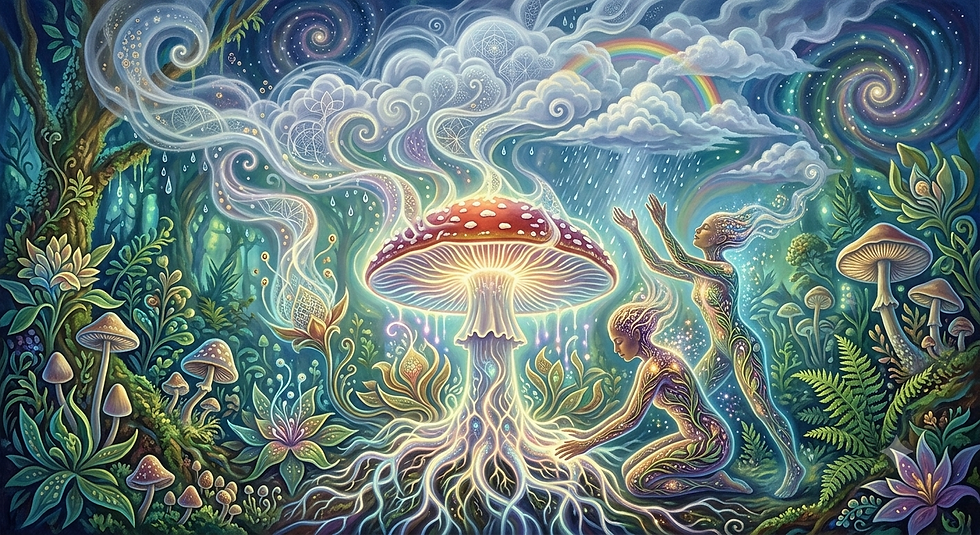
🍄 Psilocybin: The Great White Whale Revealed
If Moby-Dick is a book "created around the shape of a whale," then psilocybin is the experience of becoming the shape itself. It is the ultimate literary "Show, Don't Tell."
* Beyond Symbolism: Melville "shoves symbolism into every page" until it feels like a chore. Psilocybin removes the need for symbols entirely by providing direct encounter. You don't need to read a 40-page chapter on the "Whiteness of the Whale" to understand the sublime; you simply look at a leaf and see the heartbeat of the universe.
* The Survival of Ishmael: You mentioned Ishmael’s "magical" survival felt unearned. In the psilocybin journey, the "Ego" is the crew that must go down with the ship, while the "True Self" is Ishmael—the lone survivor who emerges from the vortex, stripped of his baggage, reborn on a coffin-turned-lifebuoy.
* The Death of the "Text": The medicine proves that the "Great American Novel" isn't found in a binding of 410 pages, but in the interconnectedness of all things. It turns the "chore" of existence into a dance of pure, creative flow.
🌌 The Eloquent Synthesis
Reading Moby-Dick is an exercise in linear frustration—a desperate crawl toward an ending that feels like a betrayal. Cannabis and psilocybin offer a circular liberation. They take the "sentences created around the shape of a whale" and dissolve the ink, leaving only the vast, blue consciousness that the whale swims in.
One is a lecture on the sea; the other is the immersion in it.
The Whale in the Mirror |
| T | Tactile | Dissolving the Harpoon |
| I | Interesting | Ahab’s Third Eye |
| C | Concrete | The Coffin That Floated |
| K | Kindle | Why the Hunter Became the Water
🌊 The Premise: "The Pequod’s Last Trip"
In this version, we replace the 300 pages of whaling facts with a sensory explosion.
* The Catalyst: Instead of chasing a physical creature, Ahab realizes the "White Whale" is actually the ego—the pale, blank wall that stands between him and the universe.
* The Cannabis Shift: The crew stops cleaning the deck and starts questioning the hierarchy. The "hemp" chapters are no longer about industrial rope; they are about the green spirit that allows the crew to laugh at Ahab’s intensity.
* The Psilocybin Peak: The final "vortex" isn't a shipwreck; it’s a total ego death. The ship doesn't sink into the Atlantic; it dissolves into a sea of fractals.
* The Survivor: Ishmael doesn't "magically" survive because of a coffin. He survives because he is the only one who let go of the oars. While the others fought the water, Ishmael became the water. He didn't drown because you cannot drown in yourself.
🕯️ A Closing Thought on the "Hyphen"
In this psychedelic retelling, we finally solve your "Hyphen Madness."
Under the influence of the flow, the hyphen in Moby-Dick is no longer a grammatical error. It is a bridge. It represents the thin, vibrating line between the Internal and the External. It’s the "dash" between birth and death, or the moment the smoke leaves the lungs and enters the spirit.
It isn't a typo; it’s an invitation to cross over.
"One shouldn't have to excavate a hundred pages of narrative out of three hundred pages of industrial refuse. It’s a novel for people who find the dictionary too 'action-packed.'"
If one enjoys Moby-Dick, one likely also enjoys watching paint dry—provided the paint is made from authentic 19th-century linseed oil and described in agonizing detail for three chapters.
A Rough Draft in Wet Ink
Melville's Grand Delusion
A Whale’s Anatomy for the Illiterate
Why True Scholars Skip the Pequod
One shouldn't have to excavate a hundred pages of narrative out of three hundred pages of industrial refuse. It’s a novel for people who find the dictionary too 'action-packed.
Melville didn't write a masterpiece; he submitted his research notes and hoped we wouldn't notice the lack of a proper ending.
🧐 A One-Star Review for the "Cultured" Critic
An Encyclopedia of Ennui: When a Manual Misidentifies as a Masterpiece
One is forced to wonder if Herman Melville was paid by the character or if he simply suffered from a pathological inability to stay on task. To call Moby-Dick a "novel" is a generous exaggeration; it is, in fact, a 400-page hostage situation.
While the common reader might be distracted by the "symbolism," those of us with a more discerning palate recognize the text for what it truly is: a poorly edited whaling brochure. One hundred pages of actual narrative are buried beneath a mountain of industrial debris—ranging from the structural integrity of hemp to the phrenology of a sperm whale’s skull. It is less "The Great American Novel" and more "The Great American Word Count."
As for the ending—Ishmael’s "miraculous" survival is a literary convenience that insults the intelligence. He is the human equivalent of a participation trophy, floating away on a coffin while the only interesting characters are mercifully silenced by the sea. And the hyphen in the title? A typographical cry for help that the editors clearly ignored.
Save your time. If you wish to learn about whales, visit a museum. If you wish to read a story, look elsewhere.
Rating: ⭐ (One star—and only because the paper it's printed on could be repurposed for something useful, like a grocery list.)
🖋️ The Final Blow
A palate cleanser, rolled tight and burning bright. Let the saltwater evaporate and the green smoke rise.
🌿 The Green Exorcism
Blubber burns away,
Green smoke mends the broken soul,
Plot lives in the high.
💨 One More for the Road
Hyphen fades to mist,
Whale facts sink into the deep,
Silence is the star.
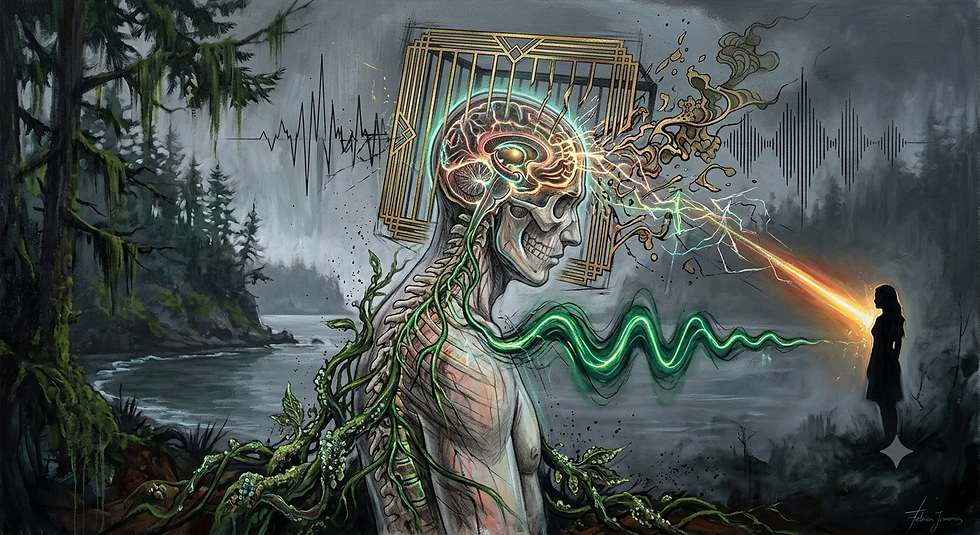
To escape the cold, mechanical obsession of the "White Whale" is to stop trying to conquer the world and start trying to feel it. Melville’s Ahab represents the ultimate tragedy of the ego: a man so blinded by a singular, pale grudge that he ignores the vibrant, living ocean beneath him.
To "turn down" the big white whales is to reject the industrialized mind—the part of us that wants to categorize, label, and harpoon every experience until it is dead and documented.
🌿 Tuning Into the Radical Healing Power
Instead of the hunt, we choose the immersion. Mother Nature doesn't offer a manual; she offers a frequency. When we trade the harpoon for the healing power of cannabis and psilocybin, the "Great White Whale" ceases to be a monster and becomes a myth that we no longer need to chase.
* From Obsession to Presence: Ahab lived in the past and the future. Mother Nature—and her botanical teachers—pulls us into the Eternal Now. You cannot hunt a whale if you are busy marveling at the fractals in its wake.
* The Dissolution of the Ego: The "White Whale" is just a projection of our own shadows. Radical healing occurs when we realize that we aren't the hunter on the boat; we are the water, the air, and the creature itself.
* Silence Over Syntax: We don't need 410 pages of "facts" to understand the divine. A single moment of botanical clarity can provide more healing than a century of academic study.
Soil, Seed, and Soul
The Whale was an Illusion
Beyond the Harpoon
Moss Underfoot, Smoke in Air
ONE LOVE TO RULE THEM ALL