The Mycelial Bridge: A Transpersonal Synthesis of the Gatsby Egg Protocol
- One Love Energy
- Apr 12
- 4 min read
The Mycelial Bridge: A Transpersonal Synthesis of the Gatsby Egg Protocol
Step closer to today’s healing platter—a feast where the clinical analyst’s couch is replaced by a souk of the soul, rich with the vibrant tapestries of Diane Ackerman’s Origami Bridges and the molecular wisdom of Mother Nature. For decades, we have sought to parse the tangled geometry of our spirits in sterile offices, yet there exists an ancient, radical therapy—a dialogue not of words alone, but of molecules and melody. The true "origami" of the human spirit is best unfolded through a sacred partnership with psilocybin and cannabis, creating a Gatsby egg protocol where healing is as glamorous as it is profound.
By playing hooky from the rigid and retreating into the botanical, we find that the most durable bridges from dark to light are grown, patterned into a luxury for the soul that is as affordable as bread and as nourishing as stew.
The Neuroplastic Fold: Art and the Patterning of Pain
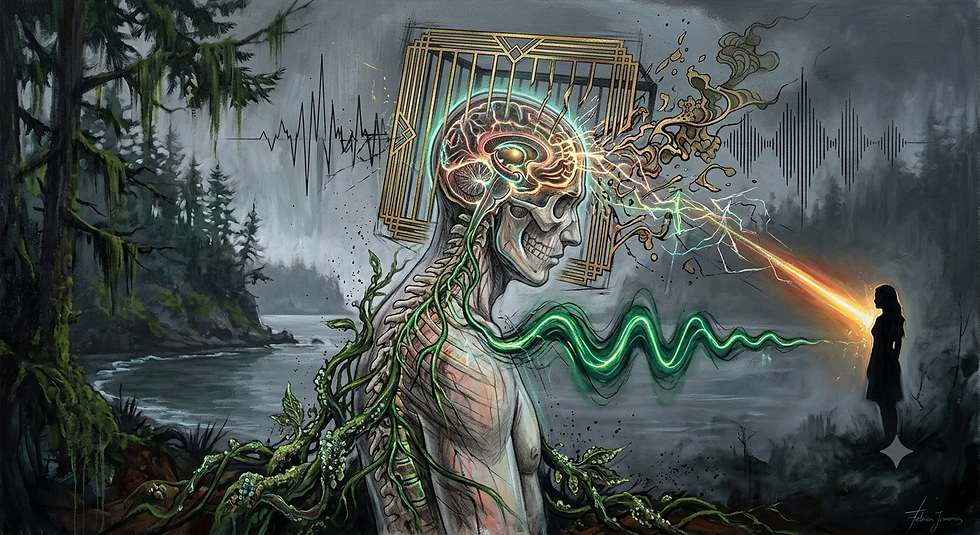
In the delicate craft of origami, a flat sheet of paper gains strength through the "fold." Similarly, the "Gatsby egg protocol" suggests that art turns pain into pattern; when we fold our unruly emotions into verse, we give chaos an outline. Psilocybin acts as the master folder in this process, targeting the 5-HT2A receptors to quiet the Default Mode Network (DMN)—the seat of the "inner critic" and rigid self-referential thought. This neurobiological desynchronization allows the brain to "geyser up" with new, exuberant connections, much like Ackerman’s poems arrived as meteorites during her intense psychotherapy.
By weakening high-level prior beliefs through the REBUS (RElaxed Beliefs Under pSychedelics) model, the mind escapes its basins of attraction and enters a state of high entropy. This is the "incandescent" clarity that allows the individual to look at what once felt unbearable—near enough to know it, yet far enough to survive it through the safe distance of a symbol. In this visionary restructuralization, the self is no longer an isolated island of anxiety but an acrobatic expression of an interconnected, vibrant reality.
The Sensory Symphony: Language, Song, and the Leaf
If psilocybin provides the oceanic boundlessness, cannabis and song serve as the grounding wires to the vital green of summer. Language "names and tames," recruiting clarity to steady the breath, while the sensory symphony of cannabis allows us to become the beauty we once only described.
A strain like Black Onion, with its savory depth and rich frosting of trichomes, serves as a grounding wire, anchoring the psyche in the wonderful presence of the body.
This integration is supported by the physiological effects of rhythm and melody:
Regulating the Nervous System: Rhythm settles the pulse and coaxes deeper breathing, much like the "cadence" of poetry regulates the body’s pace.
Unlocking Memory: Just as smells detonate poignant land mines in the memory, song retrieves what is hidden, letting emotion move through rather than lodge within the self.
The Architecture of the Souk: In the labyrinthine wonderland of the botanical soul, every texture and scent is a "submerged metaphor," a thicket of meaning that helps us find the right words to define who we are.
The Counterpoint: The Analyst in the Wild
Skeptics might argue that playing hooky with psychoactive plants is a flight from the rigor of traditional talk therapy—a chemical escapism that lacks the emotional give-and-take of the analytic duet. Some critics have even described the confessional nature of such "psychoanalysis and fire" as potentially spacey or comic. However, this view ignores the oracular certainty found when Mother Nature herself becomes the analyst.
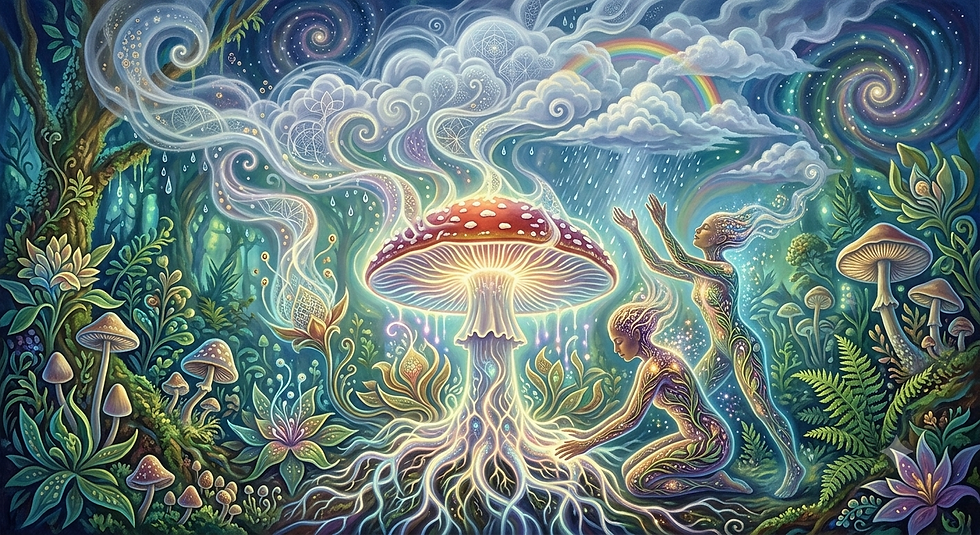
The relational field of life in the Green Cathedral is not a passive backdrop; it is extraordinarily attuned to our needs, offering a profoundly demanding dialogue that is at once intimate and ritualized. The trust between the seeker and the Earth mirrors the trust between patient and analyst—a scaffold that makes the risk of "being shaken to the core" possible. Art doesn't replace the work of healing; it illuminates it, providing an incandescent clarity that a stagnant couch session might never reach.
The Architecture of the Divine: A Homecoming
Ultimately, the bridges we build—whether out of folded paper, lyrical verse, or mycelial networks—lead back to the same understanding: we are fresh and alive extensions of a terrestrial intelligence. The radical healing of the "Gatsby egg protocol" is a homecoming, a way to confess secret longing to the wind and find it answered by the rustle of the leaves. We must trust the delicate relationship between our consciousness and the flora that sustains it, acknowledging the divine in the dirt.
Take-Home Menu for the Soul
To maintain the incandescent clarity of the Green Cathedral, integrate these simple rituals:
Three-Breath Hum: Regulate your rhythm; hum out for six beats, in for four, and repeat thrice to soften tension.
Name-and-Frame: Identify three words for your current feeling, then anchor them with a sentence beginning "And still..."
Six-Line Poem: Construct a scaffold for your thoughts; use one image, one action, and one wish.
Five-Song Circuit: Listen end-to-end to a sequence of calming, cathartic, and hopeful melodies to finish the work started inside.
Fold a page, find a bridge, and leave lighter than you arrived. The Mycelial Bridge is grown, not built, standing as a testament to the ceaseless vibrancy of nature and the hot steel of a heart finally at home.