The Universal Imperative of Artistic Expression: A Multidisciplinary Analysis of Ontology, Neurology, and Social Connectivity
- One Love Energy
- Apr 14
- 15 min read
The Universal Imperative of Artistic Expression: A Multidisciplinary Analysis of Ontology, Neurology, and Social Connectivity
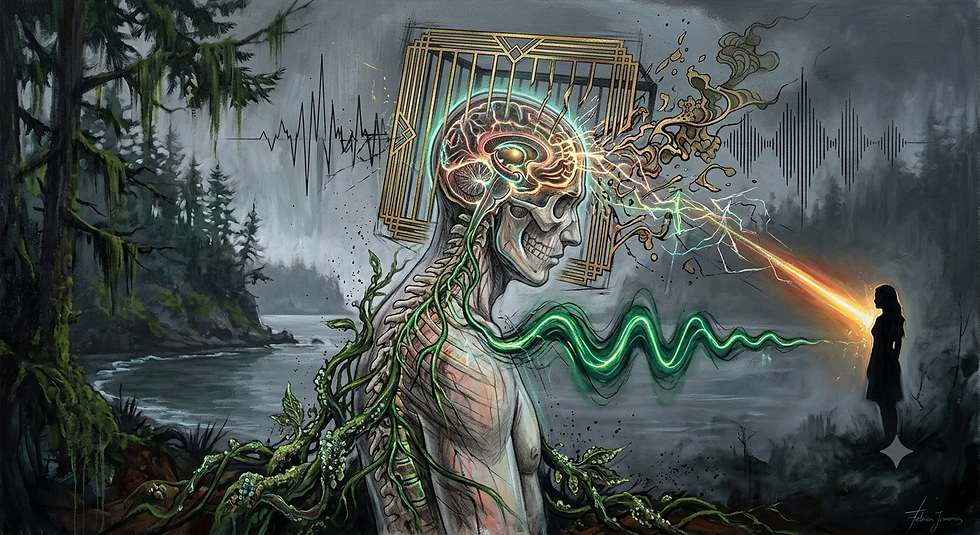
The inquiry into the nature and importance of art necessitates a synthesis of philosophical inquiry, neurological mapping, and sociological observation. Art is not merely a byproduct of human civilization but a foundational mechanism for cognitive processing, emotional regulation, and intersubjective connectivity. To address the question of what art is, one must look beyond the physical object to the intentionality of the creator and the receptive capacity of the viewer, both of which are rooted in a biological "art instinct" that predates written history. The belief that art resides within every individual and serves as a conduit for global connectivity is supported by empirical evidence regarding the universality of artistic development in children, the function of the mirror neuron system in aesthetic experience, and the efficacy of art in transforming deep-seated social conflicts.
Philosophical Foundations and the Problem of Definition
The philosophical discourse surrounding the definition of art has evolved from essentialist attempts to identify a single defining property to modern disjunctive and institutional frameworks that accommodate the immense diversity of artistic practice. Historically, traditional definitions categorized art through representational, expressive, or formal properties. Representational or mimetic definitions, rooted in ancient Greek thought, posited that the essence of art lies in its ability to imitate reality. However, this perspective was famously critiqued by Plato, who argued that artworks are ontologically inferior to the physical objects they represent, which are themselves mere imitations of the non-physical, metaphysical Forms. For Plato, art presented only an "appearance of an appearance," and because it appealed to the lower, unstable parts of the soul rather than the intellect, he believed it should be subservient to moral and truth-based realities.
As the Enlightenment shifted focus toward the human subject, Immanuel Kant redefined art as a kind of representation that is "purposive in itself," yet without a specific external end, serving instead to promote the "cultivation of the mental powers for sociable communication". This shift moved the value of art from its accuracy in depicting the world to its ability to stimulate the cognitive faculties of the viewer. In the 20th century, the emergence of radical new forms—such as conceptual art and readymades—further challenged traditional definitions, leading to the rise of conventionalist and institutional theories.
These theories, influenced by Arthur Danto and George Dickie, suggest that art is not defined by inherent physical properties but by its relationship to the "artworld," a social institution that confers the status of "art" upon certain objects or performances.
Evolutionary Framework of Artistic Definitions
| Definition Type | Core Focus | Mechanism of Value | Historical Context |
|---|---|---|---|
| Mimetic | Imitation/Representation | Accuracy in reflecting the external world or ideal forms. | Ancient Greece; Plato and Aristotle. |
| Expressive | Emotional Communication | Transmission of the artist’s internal states to the audience. | Romanticism; Tolstoy and Collingwood. |
| Formalist | Aesthetic Form | Interaction of lines, colors, and shapes to create "significant form." | Early 20th Century; Clive Bell. |
| Institutional | Social Status | Recognition by the "artworld" and its gatekeeping institutions. | Post-1960s; Danto and Dickie. |
| Functional | Experience/Aesthetic Interest | Intentional creation of an object to provide aesthetic pleasure. | Contemporary; Beardsley and Stecker. |
| Historical | Lineage/Tradition | Relational property based on art history and prior genres. | Contemporary; Levinson and Carroll. |
| Hybrid/Cluster | Multi-factorial | A set of overlapping features; no single necessary condition. | Contemporary; Gaut and Dutton. |
The difficulty of arriving at a singular, all-encompassing definition led some philosophers, following Ludwig Wittgenstein, to argue that art is an "open concept". This view holds that the phenomena of art are too diverse to admit of the unification that a traditional definition strives for; instead, they are linked by "family resemblances". Against this skepticism, proponents of functional and hybrid definitions argue that art must be grounded in the intentional endowment of "aesthetic interest," a trait found in virtually every human culture for hundreds of thousands of years. This suggests that while the *form* of art changes, the *impulse* to create it is a constant of human nature.
The Neurology of the Art Instinct and Creative Cognition
The belief that we all "have art within us" finds strong support in the field of neuroaesthetics, which examines the biological substrates of artistic production and appreciation. Neuroscientific research indicates that the brain is "exquisitely designed" for aesthetic experiences, with the drive to create art being encoded in human genes. Anthropologist Ellen Dissanayake characterizes art-making as a basic human need essential for evolution and adaptation, noting that even nomadic peoples with minimal material possessions engage in personal adornment, ritual song, and dance.
Technically, artistic creativity is supported by a distributed network of brain regions rather than a single isolated center. The nondominant (usually right) inferior parietal lobule appears to be a major "storehouse" of artistic creativity, facilitating the high degree of visual-spatial skill required for visual arts. This region works in tandem with the frontal lobes, which control imaginative thinking and the expression of emotion. Specifically, the ventromedial prefrontal cortex (VMPFL) is implicated in creative cognition and the perception of beauty, while the dorsolateral prefrontal cortex (DLPFL) manages the executive functions required for the physical output of the creative act.
Neural Differentiation in Creativity
| Creativity Type | Primary Brain Networks Involved | Regional Correlations | Functional Outcome |
|---|---|---|---|
| Artistic Creativity | Salience Network (SN) | Anterior Cingulate Cortex (ACC), Supplementary Motor Area (SMA). |
Processing emotional salience and internal creative impulses. |
| Scientific Creativity | Executive Attention and Semantic Networks | Left Middle Frontal Gyrus (MFG), Left Inferior Occipital Gyrus (IOG). | Problem-solving, semantic processing, and goal-directed attention. |
| Domain-General | Default Mode Network (DMN) | Medial Prefrontal Cortex, Posterior Cingulate Cortex. | Imagination, self-reference, and personal identity. |
Research utilizing voxel-based morphometry has shown that artistic creativity is often negatively associated with the regional gray matter volume (GMV) of the supplementary motor area and the anterior cingulate cortex.
This may suggest that a higher degree of neural efficiency or "disinhibition" in these areas allows for the free-flowing, original ideas characteristic of artistic expression. In contrast, scientific creativity is positively correlated with gray matter volume in the left middle frontal gyrus, highlighting the reliance on structured semantic processing and executive control. These findings suggest that while everyone has the potential for creativity, the "artistic brain" is specifically tuned toward the salience network and the processing of emotional and sensory-motor data into meaningful internal representations.
The "art within us" is also deeply tied to the Default Mode Network (DMN). Once thought to be active only during mind-wandering or daydreaming, the DMN is now recognized as central to personal identity, sense of meaning, empathy, and imagination. When individuals interact with art that they find personally moving, the DMN "comes alive," suggesting that powerful aesthetic experiences occur when external sensory stimuli resonate with the viewer's internal self-construct. This neurological engagement explains why art feels so personal; it acts as a "road map" for individuals to go deeper into their own experiences and identities.
The Aesthetic Triad and the Pleasure of Understanding
The mechanism by which art moves the individual is explained by the "aesthetic triad," a framework developed by Chatterjee and Vartanian. This model posits that aesthetic experiences emerge from the dynamic interaction of three distinct brain systems: the sensory-motor system, the emotion-valuation system, and the knowledge-meaning system.
(1) **The Sensory-Motor System:** This system perceives the fundamental features of the artwork, such as its color, luminosity, movement, and spatial arrangement. It involves the primary visual cortex and secondary processing areas like the fusiform gyrus, which is particularly active during the perception of faces and detailed figure drawing.
(2) **The Emotion-Valuation System:** This system is concerned with the reward centers of the brain, including the amygdala and the VMPFL. It is responsible for the release of dopamine, serotonin, and oxytocin, which generate feelings of pleasure and "liking" when viewing or creating art.
(3) **The Knowledge-Meaning System:** This is the critical system that elevates an object from a mere sensory stimulus to a "work of art". It utilizes prior knowledge, cultural background, and personal memories to find significance in the piece. When a viewer successfully "makes sense" of an artwork, they experience what researchers call "pleasure from understanding".
Interaction within the Aesthetic Triad
| System Component | Key Neural Substrates | Function in Art Experience |
|---|---|---|
| Sensory-Motor | Occipital lobe, Parietal lobe, Motor cortex. | Perception of color, movement, and implied gestures. |
| Emotion-Valuation | Amygdala, Striatum, VMPFL. | Generation of reward, pleasure, and emotional resonance. |
| Knowledge-Meaning | Anterior Temporal Lobe, Prefrontal Cortex, DMN. | Interpretation of symbols, themes, and personal relevance. |
The knowledge-meaning system allows art to promote "aesthetic cognitivism"—the idea that art can convey information about the human condition that is perhaps not as easily obtained through other means of inquiry. While history and science provide facts, art provides "insights" and shifts in attitude. Powerful aesthetic experiences can lead to "transformative" outcomes, where a viewer’s worldview is challenged and subsequently restructured. Although these big transformations can sometimes be accompanied by negative feelings—as the individual's previous understanding of the world is "turned upside down"—they often result in greater personal growth and a deeper understanding of the self and others.
Connectivity through the Mirror Neuron System
The belief in connectivity through art is anchored in a revolutionary neuroscientific discovery: the mirror neuron system (MNS). Discovered in the 1990s at the University of Parma, mirror neurons are specialized cells that fire not only when an individual performs an action but also when they observe someone else performing a similar action. This mechanism essentially allows the brain of the observer to "mirror" the behavior and emotions of another person, providing a neurally instantiated "we-centric space".
In the context of the arts, researchers David Freedberg and Vittorio Gallese proposed the theory of "embodied simulation". They argue that a crucial element of the aesthetic response consists of the automatic, non-verbal activation of embodied mechanisms encompassing the simulation of actions, emotions, and corporeal sensations depicted in images or sculptures. When we see a vigorous brushstroke on a canvas, our own motor systems simulate the gesture of the artist’s hand. When we see a depicted figure in pain, our own pain-processing networks (including the insula and anterior cingulate cortex) are activated.
Mechanism of Embodied Simulation in Art
| Type of Simulation | Artistic Stimulus | Neural Response | Effect on Connection |
|---|---|---|---|
| Action Simulation | Visible brushstrokes, molded clay, dance movements. | Activation of the premotor cortex and SMA. | Viewer "feels" the physical labor and intent of the artist. |
| Emotional Simulation | Depicted facial expressions, atmospheric lighting. | Amygdala and insula activation. | Emotional contagion and shared affective states. |
| Sensational Simulation | Depictions of touch, pain, or tactile textures. | Somatosensory cortex and ACC activation. | Visceral, bodily resonance with the subject of the work. |
This "embodied simulation" allows for a direct apprehension of the relational quality linking objects, actions, and others to our own bodies. Because these mechanisms are universal and largely automatic, they allow art to serve as a bridge that bypasses linguistic, cultural, and political barriers. Art acts as a universal symbolic language; whether it is an ancient cave painting or a modern mural, it communicates through intuition and shared human experience. This supports the claim that art is a powerful pathway for empathy and dialogue, as it puts human beings in touch with their deepest feelings and the "ineffable" commonalities of the human condition.
Developmental Universals and the Creative Self
The assertion that we all have "art within us" is empirically supported by the study of children's artistic development. Research across multiple cultures demonstrates that children follow remarkably similar trajectories in their early artistic expressions. From the age of two to approximately five or six, the "primitive art" of children—ranging from disordered scribbles to the first representational graphic patterns—shows no significant difference regardless of nationality, culture, or gender.
Stages of Children's Artistic Development (Lowenfeld and Piaget)
| Stage | Approximate Age | Core Characteristics | Developmental Basis |
|---|---|---|---|
| Scribbling Stage | 2–4 years | Disordered, longitudinal, and circular marks; eventually "naming" the scribbles. | Kinesthetic and motor coordination development. |
| Preschematic Stage | 4–7 years | First representational attempts; human figures usually depicted as "tadpoles." | Emerging cognitive ability to represent symbols. |
| Schematic Stage | 7–9 years | Development of a definite concept of man and environment; use of a "baseline." | Concept-formation and spatial awareness. |
| Dawning Realism | 9–11 years | Awareness of overlapping and detail; shift away from rigid schemas. | Increased social consciousness and environmental observation. |
| Pseudo-Naturalistic | 11–13 years | Concern for proportions, depth, and the "realistic" end-product. | Shift toward adult-like critical judgment and abstract thought. |
This universal pattern suggests that the impulse to create art is a natural unfolding of human cognitive and physical growth. It is only after the age of six that "cultural specificity" begins to predominate, as children are influenced by the social and educational environments surrounding them. For example, while U.S. and Japanese children reach similar developmental levels, Japanese children often show higher levels of detail and specific "manga" influences in their drawings by elementary school, reflecting the visual culture of their society. Despite these cultural variations, the occurrence of universal symbols—such as the sun, the house, and the human figure—across twelve different countries reinforces the idea that art is a universal form of communication that reflects the commonality of basic human needs.
Furthermore, art is spontaneously created by almost every individual at some point in their lifetime. It is considered a "window" into the human psyche and one of the most complex human activities, recruiting overlapping abilities in perception, memory, motor control, spatial reasoning, and imagination. The fact that even non-verbal individuals or those with significant brain damage often turn to art as a biological survival strategy for communication underscores its status as an innate human trait.
Art as a Tool for Peacebuilding and Reconciliation
The importance of art is most visibly demonstrated in its capacity to facilitate peacebuilding and empathy in conflict zones. In regions where intellectual and political processes have failed, the arts provide a "space for moral imagination," allowing individuals to envision new perspectives and recognize the subtle layers of complex situations. Art is uniquely suited for this role because it moves people through stories rather than statistics, and it can give voice to marginalized populations whose concerns are often ignored by decision-makers.
Case Studies in Artistic Peacebuilding
| Region | Artistic Initiative | Mechanism of Impact | Observed Outcome |
|---|---|---|---|
| **Colombia** | *Fragmentos* (Doris Salcedo) | Floor made of 37 tons of melted FARC weapons. | Symbolic foundation for building a new, peaceful society; truth-telling. |
| **Northern Ireland** | Troubles Murals (Belfast/Derry) | Public visual narratives of the conflict and its victims. | Memorialization of suffering; facilitation of collective mourning and healing. |
| **Syria** | Blue Team (Orphanage Murals) | Collaborative painting by displaced youth and refugees. | Discharge of "negative energy"; restoration of identity and hope. |
| **Peru** | *The Eye That Cries* | Labyrinth of 30,000 stones inscribed with victims' names. | Symbolic reparation; promotes justice and dignity for victims. |
| **Argentina** | Peace Sofas | Video shorts of polarized individuals sharing "connected" furniture. | Humanizing the "Other"; reducing societal polarization. |
In Colombia, the 2016 peace accord specifically included the creation of three artworks to memorialize the conflict, recognizing that symbolic reparations are as vital as political ones for lasting reconciliation. The act of "planting bodies" in the *Cuerpos Gramaticales* performance allowed victims of violence to tell their stories through theater and dance, strengthening the social fabric and promoting intergenerational exchange. These initiatives demonstrate that art can accomplish what politics cannot by providing a space for truth-telling and "catharsis processes" that are essential for handling pain and fortifying human relations.
John Paul Lederach argues that the world of peacebuilding has often "failed to nurture the artist," focusing too heavily on purely intellectual strategies. By reconnecting with our inherent creative nature, we develop the capacity to remain open and curious enough to appreciate multi-layered complexity. When we approach another person with the belief that their story is "worthy of a song or a painting," the dynamics of the encounter shift fundamentally toward empathy and respect.
The Impact of Public Art on Community and Civic Identity
The importance of art extends beyond individual healing to the collective identity of cities and communities. Public art—including murals, sculptures, and community-led installations—humanizes the built environment and provides an intersection between the past, present, and future. In a world characterized by increasing "sameness" in urban architecture, public art breaks the monotony and gives communities a unique sense of place.
Social and Economic Benefits of Public Art
* **Collective Identity:** Collaborative public art projects promote a sense of ownership and belonging, serving as a symbol of the power of community organizing.
* **Crime and Vandalism Reduction:** By building community pride and civic engagement, public art initiatives like the "100 Gates Project" have been shown to reduce illegal graffiti and vandalism.
* **Economic Revitalization:** Public art transforms urban areas into tourist destinations (e.g., the High Line in New York or the Echigo-Tsumari Art Field in Japan), boosting local economies and property values.
* **Safe Social Spaces:** During crises such as the COVID-19 pandemic, outdoor public art provided "safe galleries" for community members to gather and mingle, maintaining social cohesion despite physical distancing.
* **Prosocial Nudging:** Research indicates that aesthetics and design can reduce overconsumption and spur consumers to make more responsible, prosocial choices.
Public art also acts as a medium for social commentary and activism. Street artists like Banksy use public spaces to provoke dialogue on consumerism, poverty, and war, forcing viewers to reflect on critical social issues outside the confines of a traditional gallery. By bringing artists into the civic decision-making process, planners and engineers can arrive at more imaginative and responsive solutions to community problems.
Health, Well-being, and Cognitive Development
The utility of art is perhaps most quantifiable in its impact on mental and physical health. A 2019 World Health Organization report detailed a dazzling variety of ways that aesthetic experiences improve well-being. Engaging with the arts is a "multimodal health intervention" that combines psychological, physical, and social factors.
Art as a Preventative and Therapeutic Tool
| Health Domain | Artistic Intervention | Evidence-Based Outcome |
|---|---|---|
| **Mental Health** | Drawing, Painting, Writing. | Reduced symptoms of depression and anxiety; regulation of bipolar disorders. |
| **Neurological Disorders** | Dance, Music. | Improved balance and mobility in Parkinson’s; language recovery after stroke. |
| **Elderly Care** | Receptive/Active Arts. | Protection against cognitive decline; mitigation of loneliness and grief. |
| **Child Development** | Arts Education (Singing, Reading). | Higher academic scores (math, reading); stronger parent-child attachment. |
| **Pain Management** | Visual Arts/Theater. | Reduced perception of pain and distress in clinical populations. |
In children and adolescents, arts education is closely linked with social and emotional development. High school students who complete fine arts credits have higher cumulative GPAs in all core subjects and a significantly higher likelihood of graduating. The collaborative nature of art activities—such as a collegiate orchestra or a student-painted mural—strengthens Social-Emotional Learning (SEL) by teaching conflict resolution and empathy. Furthermore, participation in the arts boosts self-confidence, providing a unique satisfaction that enables students to tackle challenges in other areas of life with determination.
For older adults, art engagement cultivates mindfulness and new insights, stimulating the parasympathetic nervous system and promoting neuroplasticity. These activities provide a way to explore personal problems without relying solely on verbal communication, helping individuals deal with stress and traumatic experiences that might be difficult to articulate.
The Intrinsic vs. Instrumental Debate: A Synthesis
The philosophical and sociological debate over the value of art often polarizes along intrinsic and instrumental lines. Intrinsic value refers to the inherent worth of art "for its own sake"—the captivation, intellectual stimulation, and spiritual value that an aesthetic experience provides to the individual. Instrumental value refers to the "wider impact" of art as a means to achieve non-arts goals, such as public health, economic growth, or political resistance.
However, modern analysis suggests that these values are not opposed but mutually reinforcing. The "instrumental success" of an arts program (e.g., its ability to build social cohesion) is often dependent on its "intrinsic success" (e.g., its ability to move and intellectually engage the participants). Philosopher John Dewey argued that the role of art is to "restore continuity between the refined and intensified forms of experience... and the everyday events". This suggests that the "beauty" of art is not a detached luxury but a vital component of a meaningful life.
| Value Perspective | Primary Aim | Outcome Category |
|---|---|---|
| **Intrinsic** | The Experience itself. | Aesthetic growth, emotional resonance, spiritual connection. |
| **Instrumental** | The Result of the experience. | Peacebuilding, crime reduction, economic development. |
| **Capability Approach** | Human Flourishing. | Agency, choice, and the ability to lead a valued life. |
The "Capability Approach" proposed by Stern and Seifert elegance sidesteps the debate by framing art as a component of human well-being. Rather than viewing art as a "tool" (instrumental) or a "decoration" (intrinsic), it views cultural participation as a fundamental right and a necessary element of the human ability to make choices that lead to a fulfilling life. To strip art of its intrinsic value is to treat it as a disposable means; if tourism can be promoted just as well by a restaurant district as by a museum, then art becomes interchangeable. It is precisely the unique, non-interchangeable intrinsic quality of art that makes it a powerful instrument for social change.
Conclusion: The Shared Human Experience
Art is the universal language that connects us across borders, generations, and beliefs. It is a "mirror" that reflects our internal identities and a "bridge" that allows us to reach across the vast distances separating cultures. The evidence from neurology suggests that we are biologically "hard-wired" for art; it is part of our evolutionary DNA and a key mechanism of our social cognition. The mirror neuron system ensures that when we engage with art, we are engaging in a shared intersubjective space where the emotions and actions of the "Other" become our own.
The belief that we all have "art within us" is validated by the universal developmental stages seen in children and the spontaneous creative impulses found in every human culture. Art is important because it protects our cognitive health, develops our empathy, revitalizes our communities, and provides a pathway for peace in our most divided regions.
It is, as Picasso famously noted, the "wash that removes the dust of everyday life," allowing us to see the world—and each other—with renewed clarity and compassion. By recognizing the biological, philosophical, and social dimensions of art, we recognize our common humanity and the profound connectivity that links us all.