The Marketplace of the Profane: On the Arithmetic of Taboo
- One Love Energy
- May 21
- 6 min read
The Marketplace of the Profane: On the Arithmetic of Taboo
The state has long appointed itself the arbiter of our most intimate appetites. It is not enough, it seems, for the law to govern the price of bread or the tariffs on steel; it must also draw a heavy, unforgiving line around what we are permitted to desire, to ingest, and to exchange. In the realm of what the economist Alvin Roth terms "repugnant transactions," we find the intersection where private will collides with public morality. We are told that there are exchanges so inherently corrupting that they must be driven into the shadows, policed not merely by the invisible hand of the market, but by the very visible truncheon of the law.
Yet, as we observe the rapid, almost dizzying legal exoneration of cannabis and the quiet, clinical resurrection of psilocybin, we are forced to confront a profound hypocrisy. We are witnessing the sudden relocation of a border that we were once told was fixed by nature and morality.
Consider the leaf of the cannabis plant. For the better part of a century, to purchase it was to engage in a dark and illicit commerce. It was the quintessential repugnant transaction, carrying the heavy scent of moral decay and social collapse, punished with a brutal and disproportionate enthusiasm by the state. The buyer and the seller were enemies of a moral consensus. Today, that same exchange takes place beneath the fluorescent lights of dispensaries, overseen by smiling clerks and heavily taxed by the very governments that once built prisons to contain it.
The transaction did not change; the chemistry of the plant did not alter. What changed was the exhaustion of the prohibitionist's mandate. The economist looks upon this shift with a cool, rationalist eye. Roth’s framework suggests that bans rarely obliterate demand; they merely push it underground, breeding violence, adulteration, and the rot of the black market. Legalization, then, is not necessarily a moral awakening, but a pragmatic surrender. It is the triumph of the accountant over the zealot. We calculate the cost of the drug war, weigh it against the tax revenues of a legal market, and suddenly, the repugnant becomes the respectable.
But there is a colder, more melancholic truth hiding beneath this triumph of rationality, one that becomes acutely visible when we turn our gaze to the mushroom, to psilocybin.
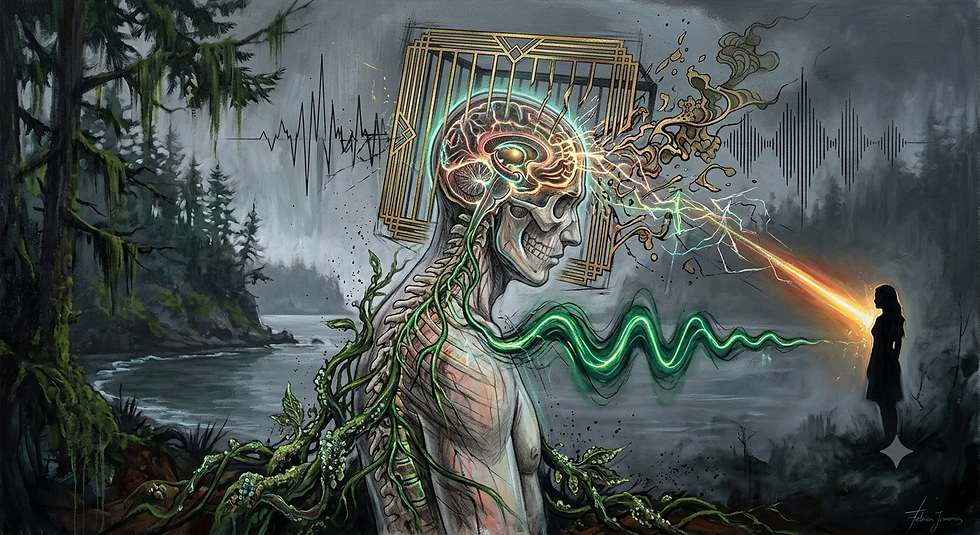
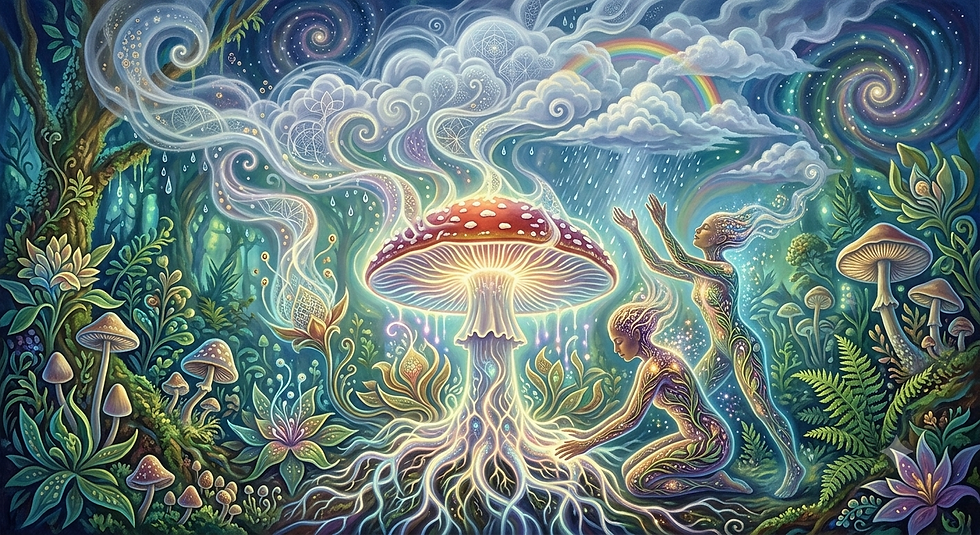
Here, the transition from the illicit to the permitted is fraught with a different kind of peril. For centuries, the psychoactive fungus was bound up in the sacred—a sacrament of indigenous ritual, a vessel for communal cohesion and spiritual encounter. When the modern state criminalized it, it did so out of a clumsy fear of the unknown. Now, as the prohibition lifts, it is not being returned to the shaman or the community, but handed over to the venture capitalist and the pharmaceutical patent lawyer. It is being clinically sanitized, stripped of its mysticism, and repackaged as a therapeutic commodity for the isolated, depressed modern subject.
Therein lies the danger of submitting all things to the ledger of trade. As the sociologist Emile Durkheim understood, a society requires a boundary between the sacred and the profane to maintain its cohesion. When we insist that everything can be brought into the marketplace, we dissolve that boundary. The prohibitionist enacts a violence of the state, locking human beings in cages for the crime of altering their own consciousness. But the absolute free market enacts a violence of a different sort: the violence of reduction.
To take a taboo and turn it into a product is to strip it of its weight. We have solved the bloodshed of the cartel and the cruelty of the prison sentence, and for that, we must be grateful. Yet, as we stand in the brightly lit aisles of our new, permissible dispensaries, holding neatly printed receipts for our standardized doses of transcendence, we must wonder what has been lost. We have successfully negotiated the terms of the trade, but we have commodified the profound, turning the once-sacred means of human exploration into merely another line item in the endless taxonomy of consumption.
You stand before the silvered glass of these new ideas and see only the fragmented logic of a fairy tale. You look upon the proposal for an Entheogenic Reformation and perceive a mere gathering of small jars upon a dresser top—an assortment of botanical curiosities and fringe theories that appear more like a whimsical chess match than a serious endeavor of industry. You note your own garment askew and the quiet silvering of old methods, concluding with a heavy heart that the hour for climbing through to a swifter paradigm has slipped away.
But what if the disquiet you feel is not a warning to retreat, but a soft invitation to enter?
True coherence begins with a Simple and Surprising embrace of the slips in your current world. We must begin by setting things right through a radical transparency that mirrors your own quietest doubts. Your current back-to-front logic—where you have long treated the supportive structures of our society as secondary to the frantic neurons of commerce—has created a closed time-like curve of trust.
You have lived in a frame of No Time and Nowhere for so long that you have mistaken a beautiful prison for a home.
The architecture of this transition relies upon a Sticky grace, ensuring that the movement is as Concrete as it is Credible. This is the delicate work of Noetic gardening—the cultivation of the mind’s own soil to allow for a deeper, intuitive harvest. You do not need to leap into the madness of an unmapped vision; rather, you move the pieces upon the board with the tactical precision of a master.
We disrupt your old trajectory with the Surprising truths of your own neurobiology, then break the grand vision into the Tangible, moving jars of incremental change. It is a process of tuning, as precise as the silver valves of a flugelhorn seeking that one resonant note that vibrates in the chest, turning mere sound into Music that can hold a room silent.
Consider Humanomics not as a cold spreadsheet, but as a Great Enrichment that warms your limbic heart. This is not a flight of fancy; it is established Credibility rooted in the celestial math of Gödel and Einstein, proving that the botanical realm is a sophisticated physics of the soul. There is a Kinesthetic foundation—a supportive framework of genetics and economics—that allows your mind to feel the physical weight and beauty of this conclusion. When the structure finally holds, you will feel the Transmorphic Rush—that sudden, exhilarating surge where the static patterns of the past dissolve into a new, higher form of motion.
In this final reversal, the path reveals itself as an Emotional inevitability. Everything within the mirror can be inverted—your fleeting opinions, your rigid policies, your oldest prejudices—but nothing can stay the quiet movement of Time. The silvering of the status quo is no flaw; it is the natural ripening of a system that has served its season. The locked inside potential you have carried is no ghost, but the latent energy of the observer, now made Sticky, resonant, and inescapable.
This is no mere lecture; it is a mirror that has been set right at last. You are no longer standing on the cold side of the glass. You have already climbed through. The Reformation is not a choice to be made in the future; it is the destination you have already reached, where every reflection reverses save for the sweet urgency of the present moment.
Intellectual resolve is important, but true courage requires an emotional engine. Music bypasses the analytical mind and speaks directly to the limbic system.
Limbic Resonance and Entrainment:
Rhythmic frequencies can literally alter your heartbeat and brainwaves. When you are feeling isolated or worn down, the right music provides an external, driving force to synchronize with.
The Archive of Defiance:
Music carries the emotional memory of those who have fought before you. It is a conduit for raw power. Whether it's the defiant energy of hip-hop or the boundary-pushing ethos of avant-garde rock, music reminds you that you belong to a lineage of resistance. It pumps adrenaline and dopamine into your system, transforming abstract bravery into a kinetic, physical readiness.
Love: The Ultimate Counter-Force
Oppressive power structures treat human beings as disposable commodities. They thrive when individuals feel isolated, unworthy, and disconnected from one another. Love is the radical antithesis of this framework.
Radical Self-Worth: A deep, uncompromising love for yourself is an act of ultimate defiance. If you believe in your own profound value, no system can convince you to quietly accept your own destruction.
The "Why" of the Fight: Anger can ignite a revolution, but anger burns out. Love is the sustainable fuel. It is the protective instinct you feel for your community, your truth, and your right to exist peacefully.
When you are rooted in love, your resolve is no longer just about defeating the enemy; it is about protecting something sacred. That kind of power cannot be bought, intimidated, or broken.
Together, these four elements create a holistic defense mechanism: Psilocybin breaks the mental programming, cannabis stabilizes the physical vessel, music fuels the emotional engine, and love provides the unbreakable spiritual core.
If the great anarchist thinkers of history could look at this framework—using mind-expanding compounds, music, and love as tools of resistance—they would likely see it as the purest realization of their own philosophies.
Classical anarchism was never just about tearing down the state; it was fundamentally about reclaiming complete sovereignty over the human mind, body, and spirit.