Marked for Tides and Sunbeams
The Nexus of Pain and Beauty: A Multidisciplinary Analysis
Introduction: The Paradoxical Convergence
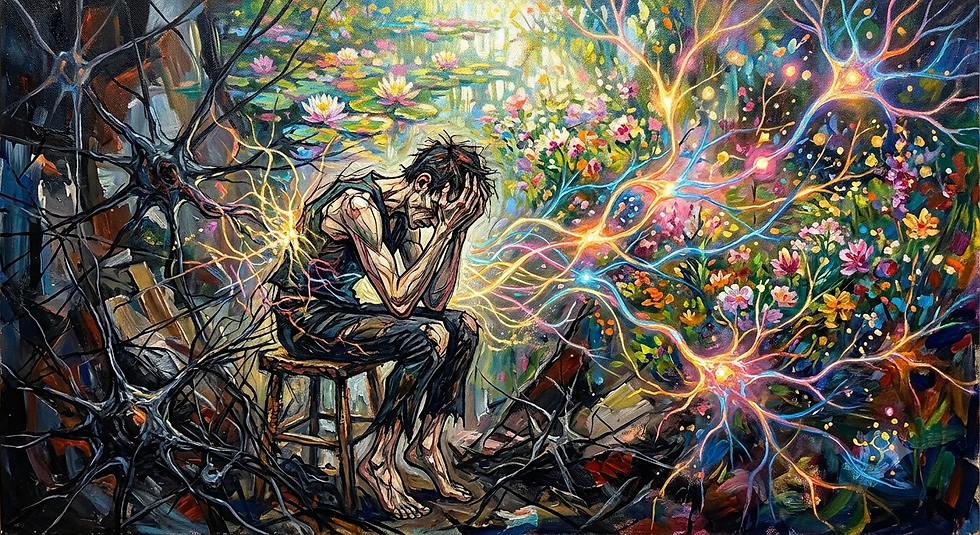
The intersection of pain and beauty represents one of the most enduring paradoxes in human experience, aesthetic theory, and biological science. Empirically and conceptually, these two states appear diametrically opposed. Pain serves as an evolutionary biological alarm system, signaling tissue damage, psychological threat, and the urgent need for withdrawal. Beauty, conversely, typically evokes approach behaviors, reward-circuit activation, and profound emotional and physiological pleasure. Yet, human behavior consistently demonstrates a profound convergence of these phenomena. Individuals actively seek out tragic narratives that evoke weeping, listen to melancholic music that induces profound sorrow, and subject themselves to agonizing physical modifications in the pursuit of aesthetic enhancement. Conversely, encounters with overwhelming beauty can precipitate acute psychological and physiological distress, manifesting in symptoms ranging from autonomic panic to hallucinations.
This synthesis of suffering and aesthetic pleasure cannot be adequately explained by a single disciplinary framework. Rather, it necessitates an exhaustive examination across philosophy, neurology, endocrinology, and evolutionary biology. The drive to find beauty in pain—and the capacity for beauty to become painful to bear—is deeply rooted in neurochemical reward systems, the functional architecture of the brain's resting-state networks, and the evolutionary imperatives of costly signaling. By dissecting the cognitive overrides that allow for benign masochism, the structural overlap between nociceptive and aesthetic neural matrices, and the hormonal cascades underlying the sensation of being deeply moved, a unified model emerges. This model suggests that the boundary between pain and beauty is not a rigid anatomical or conceptual divide, but rather a fluid, context-dependent threshold mediated by cognitive distance, self-referential integration, and interoceptive awareness.
Philosophical Ontologies of Suffering and the Sublime
The theoretical framing of pain and beauty has evolved through centuries of philosophical inquiry, largely driven by the effort to understand why negative sensory or emotional inputs can produce profound aesthetic satisfaction. This inquiry has generated distinct ontological categories separating the merely beautiful from the overwhelmingly sublime, the ordered from the chaotic, and the destructive nature of pain from the generative nature of justice.
The Origins of the Sublime: From Longinus to Burke
The conceptualization of aesthetics that transcend mere prettiness traces its origins to antiquity, with Longinus first articulating the power of the sublime in rhetoric and drama. However, the modern philosophical distinction was truly ignited in the eighteenth century.
Thinkers like the Earl of Shaftesbury began associating the sublime with the awe induced by the infinity of space, positing it not necessarily in opposition to beauty, but as a quality of grander and higher importance.
The dichotomy was formalized by the Irish philosopher Edmund Burke in his 1757 work, *A Philosophical Enquiry into the Origin of Our Ideas of the Sublime and Beautiful*. Burke posited that beauty and the sublime operate on human physiology in diametrically opposed ways, rooted in the fundamental forces of pleasure and pain. Beauty, for Burke, is inherently a social emotion; it is characterized by qualities of smallness, smoothness, and delicacy, and it evokes a pleasure that literally relaxes the physical fibers of the body, pulling the individual toward others in shared affection.
The sublime, conversely, is rooted in terror, danger, and pain. It is evoked by vastness, infinity, obscurity, and power—qualities that dwarf the human scale and threaten annihilation. Burke argued that fear, being an apprehension of pain or death, operates in a manner analogous to actual physical pain, robbing the mind of its capacity to act or reason. The highest effect of the sublime is astonishment, a state of the soul wherein all motions are suspended with some degree of horror. Crucially, Burke established the prerequisite of "distance" for the sublime to occur. When mortal danger presses too closely, the result is raw terror and dread; when the threat is perceived from a position of safety or conceptual remove, it generates the sublime.
Kant, Schopenhauer, and the Triumph of Reason over Vulnerability
Immanuel Kant expanded upon Burke’s physiological foundation by relocating the sublime from the external object to the internal architecture of the human mind. In his 1790 *Critique of Judgment*, Kant asserted that the sublime is a subjective conception arising from the inadequacy of human imagination when confronted with the infinite. He delineated the Mathematical Sublime (arising from sheer, incomprehensible size, such as the night sky or a monumental skyscraper) and the Dynamical Sublime (arising from overwhelming natural power, such as a violent storm).
For Kant, the sublime is essentially a confrontation between our imaginative limits and the demands of reason. The initial feeling is one of displeasure, as the senses fail to encompass the vastness or power of the phenomenon. However, this failure of the sensory imagination awakens a realization of the supremacy of human reason, which can comprehend the concept of infinity even when the senses cannot perceive it. Thus, the Kantian sublime transforms a sense of physical insignificance and potential pain into a morally uplifting recognition of human dignity and cognitive sovereignty.
Arthur Schopenhauer further evolved this concept, viewing the sublime as a mechanism for escaping the self. Schopenhauer observed degrees of the sublime, ranging from the mildly disquieting to the completely overwhelming. In these moments of confrontation with immense power or vastness, the individual ceases to be driven by practical, survival-oriented concerns and becomes a "disinterested observer". The pain of individual striving and the ego itself dissolve into the scene, aligning with architectural and natural experiences that enforce a profound feeling of insignificance, yet paradoxically open the observer to a reality beyond the self.
Nietzsche: The Apollonian Illusion and the Dionysian Reality
The question of why humans actively consume and enjoy representations of immense suffering is at the core of the "paradox of tragedy." Friedrich Nietzsche addressed this paradox in his 1872 work *The Birth of Tragedy*, framing it through the interplay of two opposing mythological forces: the Apollonian and the Dionysian.
Nietzsche posited that the ancient Greeks were unusually sensitive to the horrors of existence, encapsulated by the "Wisdom of Silenus," which declared that the best thing for a human is not to have been born, and the second best is to die soon. To survive this profound existential pain, the Greeks cultivated the Apollonian—the drive for individuation, structure, light, reason, and the creation of beautiful illusions (such as dreams, plastic arts, and epic poetry) that shielded humanity from raw suffering.
Dionysus, conversely, represents the chaotic, formless, primal unity of existence, where the boundaries of the individual ego dissolve into a collective ecstasy (intoxication, music, and ritual madness) that is inextricably linked with suffering and the destruction of the self.
Nietzsche argued that classical Athenian tragedy achieved its unparalleled aesthetic power by synthesizing these two forces. The Dionysian chorus forces the spectator to confront the terrifying, meaningless suffering at the heart of life, but this confrontation is made bearable—and profoundly beautiful—by being structured through Apollonian forms, dialogue, and myth.
By witnessing the tragic hero's destruction, the audience vicariously experiences the death of the individual ego and is absorbed back into the indestructible, primordial life force. Because the Apollonian impulses give form to the Dionysian terror, the aesthetic experience is not destructive but rather a creative affirmation of life. This led to Nietzsche's famous maxim that "it is only as an aesthetic phenomenon that existence and the world are eternally justified".
Scarry: The Making and Unmaking of the World
In contemporary philosophical frameworks, the dynamic between pain and beauty is examined through the lenses of somatic experience and social justice. Elaine Scarry, in *The Body in Pain*, articulates how intense physical pain defies language, isolates the sufferer, and systematically "unmakes" the human world. Pain represents the ultimate contraction of reality into the boundary of the suffering body, destroying the capacity for creation.
In stark contrast, Scarry posits in *On Beauty and Being Just* that beauty is a generative force that "makes" or repairs the world. Addressing political arguments that characterize beauty as a distraction from social issues or a handmaiden of privilege, Scarry defends aesthetic pleasure as a catalyst for ethical orientation. Beauty commands attention, decentralizes the self, and distributes awareness outward toward others. Scarry argues that the symmetry and balance inherent in beautiful objects instruct the observer in the concepts of fairness and equality, rendering an abstract concept directly available to sensory perception. In this paradigm, beauty is the functional antidote to the world-destroying, isolating nature of pain, drawing the individual toward a profound concern for justice.
The Psychology of Benign Masochism and Hedonic Reversal
The active pursuit of painful aesthetic experiences is further elucidated by the psychological theory of "benign masochism." Humans are uniquely distinguished from other animals by their capacity to extract pleasure from initially aversive stimuli, a phenomenon termed a "hedonic reversal".
The Architecture of Cognitive Override
Psychologist Paul Rozin identifies a coherent pattern of preferences for activities that induce sadness (tragic art, weeping), oral irritation (spicy foods), fear (thrill rides), disgust, and physical exhaustion. Benign masochism occurs when the body mounts a defensive physiological response to a perceived threat—such as eye tearing and sweating in response to chili peppers, or a pounding heart and crying in response to a tragic film. However, the brain simultaneously applies a cognitive override, recognizing that the threat is illusory, fictional, or safely contained.
This co-activation of somatic distress and cognitive safety generates a complex pleasure derived from a sense of mastery, framed as "mind over body". The distribution of liking for these initially negative activities is often bimodal, with a substantial proportion of individuals reporting that their favorite level of the experience is precisely the intensity just below the threshold of becoming genuinely intolerable.
The Paradox of Tragedy and the "SAD" Subscale
In aesthetic contexts, benign masochism perfectly mirrors Burke's requirement of physical distance for the realization of the sublime. When observing a tragic play or listening to melancholic music, the empathic distress is genuine, but the meta-experience of distancing allows the observer to safely enjoy the emotional intensity. A cognitive assessment of the artificial nature of the stimulus is essential to discount the sadness as inconsequential, transforming it into pleasure.
Statistical analyses of benign masochism reveal that liking for sad experiences forms a highly coherent, domain-general entity. Confirmatory factor analyses demonstrate that individuals who enjoy sad movies are highly likely to enjoy sad novels, sad paintings, and sad music, collectively loading onto a single "SAD" subscale. Furthermore, this preference is strongly correlated with the enjoyment of the body's defensive physiological reaction to sadness, namely crying.
Notably, the enjoyment of sadness exhibits a consistent gender divergence, being significantly higher in females across all measured domains, whereas males exhibit higher preferences for strong/alcoholic tastes and fear. Interestingly, masochistic enjoyment of stimuli like disgusting jokes and painful massage has also shown positive correlations with certain antisocial traits, including subclinical psychopathy and everyday sadism, suggesting that the detachment required for hedonic reversal relies on complex variations in empathy and emotional compartmentalization.
| Domain of Benign Masochism | Examples of Aversive Stimuli | Associated Physiological Defensive Reaction | Primary Demographic Correlation |
|---|---|---|---|
| **Sadness (SAD)** | Tragic movies, sad music, sad novels | Weeping, lump in throat | Higher in females |
| **Fear** | Thrill rides, horror films | Pounding heart, adrenaline release | Associated with Sensation Seeking |
| **Oral Irritation / Pain** | Chili peppers, painful massages | Tearing, sweating, tissue inflammation | Higher in males (for strong tastes) |
| **Disgust** | Disgusting jokes, viewing medical procedures | Nausea, withdrawal reflexes | Negatively correlated with Disgust Sensitivity |
Neurology: The Shared Cortical Matrices of Nociception and Aesthetics
The philosophical intuition that pain and beauty are intimately connected is heavily supported by modern neuroimaging. The neural architecture responsible for processing physical tissue damage and social rejection exhibits a striking structural and functional overlap with the networks responsible for aesthetic appreciation, moral judgment, and profound self-reflection.
The Pain Matrix and Interoceptive Awareness
The perception of pain is not localized to a single anatomical structure but emerges from a highly distributed network commonly referred to as the "pain matrix." This network includes the primary and secondary somatosensory cortices (S1, S2), the anterior cingulate cortex (ACC), the insular cortex, the prefrontal cortex (PFC), and the thalamus.
Within this matrix, specific functional segregations exist. The posterior insula and S1 process the objective, discriminative sensory features of pain, such as location and raw intensity. In contrast, the anterior insula (AIC) and the dorsal anterior cingulate cortex (dACC) process the affective-motivational dimensions—the subjective unpleasantness, negative valence, and the emotional distress caused by the nociceptive input.
Crucially, the AIC and dACC are not exclusively dedicated to pain; they are the primary hubs of the "salience network." This network is responsible for detecting behaviorally relevant stimuli and integrating interoceptive signals—feedback from the viscera, heart rate, and autonomic nervous system—with higher-order emotional awareness. This interoceptive integration allows the brain to map physical bodily states onto subjective feelings, forming the neurological basis of the conscious "feeling self". The high spatial resolution of functional magnetic resonance imaging (fMRI) has mapped this posterior-to-anterior progression, demonstrating how raw sensory data is re-represented in the anterior insula to become conscious emotion.
Fronto-Insular Lateralization and Aesthetic Conflict
Because of their fundamental role in interoception and salience, the insula and ACC are heavily implicated in both the direct experience of pain and the empathic observation of others' suffering. Furthermore, these exact same regions mediate the pain of social exclusion and interpersonal rejection.
When individuals experience social ostracism, the dACC and anterior insula activate powerfully, demonstrating that the human brain utilizes the same visceral-affective circuitry to signal both somatic damage and relational trauma. The right dorsal lateral prefrontal cortex (DLPFC) acts as a top-down regulatory mechanism in this dynamic; manipulating the right DLPFC via transcranial magnetic stimulation directly alters a subject's feelings of social exclusion, confirming its role in processing the distress of rejection.
In the realm of aesthetics, the insula and ACC undergo complex modulations.
A functional lateralization is observed within the insular cortex: the left anterior insula is predominantly associated with parasympathetic activity, positive emotions, and empathy, while the right anterior insula is associated with sympathetic arousal, negative valence, and the subjective awareness of the self-state.
This lateralization is highly relevant to aesthetic judgments. When an individual engages with art that presents an aesthetic conflict—such as a beautifully executed painting depicting horrific, ugly, or tragic content—the brain must resolve the cognitive dissonance between the appealing form and the aversive meaning. Neuroimaging reveals that this incongruence results in greater activation in the right AIC, which establishes stronger functional connectivity with the orbitofrontal cortex (OFC). This connectivity reflects the processing conflict between the automatic aesthetic pleasure triggered by the artwork's form and the cognitive prediction of pain based on its content. Conversely, during simple judgments of facial attractiveness and moral goodness (the "beauty-is-good" stereotype), the medial OFC shows increased activation while insular activity decreases, highlighting an opposing relationship between straightforward reward processing and negative visceral salience.
The Default Mode Network (DMN) and the Gateway to the Self
Perhaps the most significant revelation in neuroaesthetics is the role of the Default Mode Network (DMN) in mediating profound aesthetic experiences. The DMN, primarily composed of the medial prefrontal cortex (mPFC), posterior cingulate cortex (PCC), precuneus, and angular gyrus, is universally recognized as a "task-negative" network. It exhibits high baseline activity when a person is at wakeful rest, engaged in mind-wandering, autobiographical memory retrieval, or self-referential thought. Typically, when an individual focuses their attention outward to perform a goal-directed task or evaluate an external stimulus, the DMN is rapidly suppressed to allocate cognitive resources to executive and sensory networks.
Hyperconnectivity and hyperactivity within the DMN—specifically between the DMN and the subgenual prefrontal cortex (sgPFC)—are heavily implicated in maladaptive rumination and major depressive disorder, essentially trapping the mind in an inward-facing loop of psychological pain. Chronic physical pain conditions, such as fibromyalgia and complex regional pain syndrome, also demonstrate abnormal DMN connectivity, as persistent nociceptive signals force a state of chronic self-focus, heightened pain detection, and stress dysregulation.
However, the DMN behaves highly atypically during intense aesthetic encounters. Research by Edward A. Vessel and colleagues utilized fMRI to scan observers viewing 109 color artworks, asking them to rate how strongly the art moved them on a 4-point scale. The aesthetic responses were highly individualized; the average correlation between observers' ratings was a mere 0.13, proving that what constitutes profound beauty is deeply subjective.
As observers viewed the art, sensory regions (occipito-temporal) and reward centers (striatum) increased their activity linearly in proportion to the artwork's aesthetic rating. The DMN regions, as expected, initially deactivated below their resting baseline when the observer viewed artworks rated as low, moderate, or highly pleasing (levels 1, 2, and 3). Yet, when an observer encountered an artwork they rated as intensely moving (a rating of 4), the suppression of the DMN was suddenly alleviated. The mPFC and PCC exhibited a step-like increase in activation, returning to or exceeding their baseline resting levels.
This step-like activation signifies that an external object has successfully bypassed the brain's standard external-task suppression mechanisms and gained direct access to the neural substrates of the self. The mPFC acts as a neural gateway, signaling deep personal relevance. The artwork ceases to be merely an external stimulus; it is integrated into the observer's self-identity, mediating the profound sensation of being "touched from within". This mechanism elegantly resolves the subjectivity-universality paradox of art: while the specific artworks that trigger this release vary wildly from person to person (subjectivity), the neural mechanism of mapping external beauty onto the internal architecture of the self remains constant across human brains (universality).
Stendhal Syndrome: Neurological Overload in the Presence of Beauty
The potent capacity for beauty to interface directly with the autonomic nervous system and networks of self-reference can occasionally culminate in a state of acute neuro-physiological crisis known as Stendhal Syndrome, or hyperkulturemia. Initially identified by psychiatrist Graziella Magherini in tourists visiting Florence, the syndrome is a psychosomatic disorder triggered by exposure to overwhelming art or concentrated beauty.
Symptoms are explicitly dysautonomic and psychiatric, mimicking a severe panic attack, ecstatic seizure, or acute pain response.
Sufferers report tachycardia, diaphoresis, hyperventilation, dizziness, chest pains, confusion, and in severe cases, hallucinations, temporary amnesia, and loss of consciousness. Magherini categorized these breakdowns into thought disorders (paranoia, perceptual alterations), affective disorders (euphoria, depressive anxiety, feelings of omnipotence), and somatic panic projections.
Neurobiologically, Stendhal Syndrome represents a hyper-activation of the anterior insular cortex, mirror neuron systems, and the salience network. The profound aesthetic input overwhelms the brain's predictive coding and interoceptive regulation, causing a massive sympathetic nervous system discharge. When the perceptual demands of the artwork—its historical weight, its visual perfection, or the realization of the observer's own insignificance in its presence—exceed the observer's emotional regulatory capacity, the boundary between the internal self (DMN) and external reality collapses. The resulting state is one where beauty literally inflicts acute physiological pain and psychological disorientation, manifesting the sheer terror and astonishment of the Burkean sublime in a clinical setting.
Endocrinology and the Neurochemistry of Aesthetic Emotion
The translation of external aesthetic stimuli into physiological states of pleasure, pain, or transcendence is mediated by intricate neurochemical and endocrine cascades. The paradox of why humans enjoy sad or tragic art has been a focal point for researchers attempting to isolate these biochemical variables, leading to intense debate regarding the roles of prolactin, endogenous opioids, and oxytocin.
The Prolactin Controversy and Sham Grief
One of the most prominent biological explanations for the enjoyment of sad music was the "Prolactin Theory" proposed by David Huron. Prolactin is a peptide hormone associated with lactation, maternal bonding, and the regulation of stress. Crucially, it is found in high concentrations in "psychic tears" (tears of grief or intense emotion) as opposed to basal or irritant tears (such as those caused by chopping onions).
Huron hypothesized that listening to sad music induces a state of "sham grief"—an empathetic stress response that triggers the release of prolactin. Because the threat presented by the music is illusory and poses no real danger, the consoling, tranquilizing, and analgesic effects of prolactin dominate the experience, returning the body to homeostasis. This provides the listener with a sense of comfort, warmth, and pleasure—likened to "Mother Nature's way of wrapping her arms around you".
However, rigorous empirical testing has systematically dismantled the prolactin hypothesis.
Studies measuring serum prolactin concentrations in listeners exposed to participant-selected sad music found no significant increase in prolactin levels, nor any correlation between prolactin and the reported enjoyment of the music. In fact, researchers noted that the hormonal profile of listeners who were deeply moved by sad music—particularly highly empathic individuals—reflected a general reward and pleasure pattern, while stress markers such as cortisol and adrenocorticotropic hormone remained completely unchanged across conditions.
A major confounding factor is that dopamine, a neurotransmitter heavily involved in reward and pleasure, actively inhibits the release of prolactin. Because sad music that is enjoyed triggers a dopaminergic reward response, it simultaneously suppresses prolactin, contradicting the homeostatic model. Acknowledging these empirical failures, Huron published a formal retraction of the theory in 2023, declaring that the homeostatic prolactin model for sad-music enjoyment is definitively incorrect.
The Opioidergic System, Naloxone, and Musical Frisson
The reward pathways mediating aesthetic pleasure rely heavily on the dopaminergic and endogenous opioidergic systems rather than stress hormones. A hallmark of intense aesthetic pleasure is "frisson"—also known as aesthetic chills, musical thrills, or skin orgasms. Frisson is characterized by a rapidly spreading sensation of tingling, piloerection (goosebumps), pupil dilation, and profound euphoria, typically lasting only a few seconds.
Frisson is an autonomic nervous system phenomenon driven by sympathetic arousal in response to musical expectancies, sudden dynamic shifts, violations of acoustic norms, or novel harmonies. Neuroimaging confirms that frisson powerfully activates the reward circuitry, including the nucleus accumbens, orbitofrontal cortex, and insula. The intensity of the chills correlates directly with peaks in dopamine transmission.
Furthermore, the endogenous opioid system plays a critical, gatekeeping role in the physical perception of these chills. To test this, researchers have utilized double-blind pharmacological designs administering naloxone or naltrexone—powerful \mu-opioid receptor antagonists typically used to reverse opiate overdoses. The administration of these antagonists has been shown to block or severely attenuate the objective physical experience of musical frisson, reduce pleasure-related skin conductance responses (SCRs), and diminish the exploratory drive to seek out new music. Interestingly, blocking opioid transmission does not consistently alter the subject's baseline cognitive appraisal of the music's subjective pleasantness, indicating that the opioidergic system specifically mediates the visceral, somatic reward of the aesthetic experience rather than the cognitive evaluation of it.
This biochemical mechanism is deeply linked to the human drive for knowledge acquisition and the resolution of cognitive dissonance. The aesthetic peak, mathematically conceptualized by physicists exploring the logic of cognition, occurs when the rate of change of conditional similarity between mental models and external stimuli reaches a maximum.
Let S(t) represent the conditional similarity between sensory signals and available mental models. The aesthetic chill manifests as a local maximum where the derivative approaches zero:
At this juncture, learning slows to a halt, cognitive dissonance is resolved, the opioid system triggers a physical shiver, and a state of intense reward is achieved. By blocking the \mu-opioid receptors, naloxone severs the link between cognitive resolution and physical somatic reward, proving that aesthetic beauty functions biochemically as an endogenous analgesic and euphoriant.
Kama Muta: The Physiology of Being "Moved by Love"
Expanding beyond musical chills, recent affective science has identified a distinct, domain-general emotion termed *kama muta* (Sanskrit for "moved by love"). It captures the complex sensation of being touched, stirred, or moved to tears by narratives of sacrifice, reunions, immense awe, or sudden intensifications of communal sharing. To validate this construct, researchers deployed the KAMMUS scale across 19 countries and 15 languages, surveying 3,542 participants, proving it to be a cross-culturally universal emotional state.
Kama muta encompasses a unique physiological profile that perfectly bridges the gap between pain (tears, feeling choked up, a lump in the throat) and pleasure (warmth in the chest, buoyancy, exhilaration). Unlike pure sympathetic arousal (which drives fight-or-flight panic and accelerates the heart) or pure parasympathetic relaxation, kama muta involves a complex physiological co-activation. Empirical physiological tracking during kama muta-inducing videos reveals that intense self-reported experiences correlate with increased phasic skin conductance, elevated skin temperature, piloerection, and increased zygomaticus (smiling) activity. Concurrently, there is a marked *decrease* in heart rate and respiration rate, as well as a significant reduction in postural sway velocity.
This hybrid physiological state literally grounds the individual, promoting physical stillness and emotional devotion. The evolutionary utility of kama muta is tied to the preservation of communal bonds and the elicitation of caregiving behaviors. For instance, the response to neonatal "baby schema" (cuteness characterized by large eyes and round features) triggers rapid activity in the precuneus and orbitofrontal cortex, motivating nurturing behavior and approach. This response utilizes oxytocin and endogenous opioids to chemically reward prosociality and devotion. When humans weep at a beautiful painting, a poignant film, or an act of high-quality empathetic listening, they are experiencing kama muta—a neurochemical reinforcement of human interconnectedness, disguised in the physiological markers of physical distress.
Evolutionary Biology: Costly Signaling and Somatic Paradigms
The convergence of pain and beauty is not restricted to abstract emotional processing; it frequently involves the physical body acting directly as a canvas. The evolutionary framework of costly signaling provides robust explanatory power for why humans endure severe physical pain to achieve aesthetic enhancement. Simultaneously, aesthetic engagement itself possesses powerful modulatory effects on somatic pain, acting as a non-pharmacological analgesic.
Body Modification as Costly Honest Signaling
Across millennia and diverse cultures, humans have engaged in permanent body modification through tattooing and scarification. These practices are deeply embedded in cultural identity: the traditional Samoan *pe'a* marks social status and maturity; the facial tattoos of the Japanese Ainu women serve as spiritual protection and beauty markers; and the tattoos of Indigenous North American tribes signify wealth, ancestry, and martial prowess. In all these traditions, the modifications involve deliberate, repeated trauma to the dermis using rudimentary tools, incurring intense pain, prolonged healing periods, and substantial risks of potentially fatal infection.
Evolutionary psychologists analyze this seemingly counter-adaptive behavior through the lens of Costly Signaling Theory, derived from Zahavi's handicap principle. According to this model, tattoos serve as honest, unfakeable indicators of underlying biological quality, immune competence, and genetic fitness. Because the modification is painful and biologically taxing, only individuals with superior health profiles and robust immune systems can afford to display the signal without succumbing to infection or failing to heal properly.
This theory is strongly supported by the Immunocompetence Handicap Hypothesis and clinical studies tracking secretory immunoglobulin A (SIgA) and cortisol levels in tattooed individuals. The process of being tattooed induces an acute stress response, elevating cortisol. However, individuals with extensive tattoo experience demonstrate a significantly elevated SIgA response—an antibody critical for mucosal immunity and first-line defense—compared to novices. This indicates that the immune system physically habituates and toughens in response to the repeated stress of aesthetic modification, much like the biological adaptations seen in response to physical exercise or vaccination.
Furthermore, while chronic stress leads to inflammageing and a deterioration of the immune system via early life adversity (ELA), the acute, controlled stress of body modification boosts general biological fitness.
In this context, the pain of the procedure is not merely an unfortunate side effect; it is the fundamental mechanism that validates the beauty of the resulting art. The pain guarantees the biological truth of the aesthetic signal, communicating resilience, maturity, and survivability to potential mates and social rivals.
Aesthetic Analgesia: Beauty as a Nociceptive Modulator
Just as pain can validate beauty, beauty can actively modulate and suppress the perception of physical pain. The emerging field of neuroaesthetics in clinical environments has demonstrated that active, engaged encounters with art offer significant analgesic benefits, improving pain tolerance and quality of life for chronic pain sufferers.
This "aesthetic analgesia" operates primarily through cognitive distraction (distraction analgesia) and the top-down modulation of affective states. In clinical settings, the integration of visual art and nature imagery into hospital environments has been shown to reduce stress, lower the stress hormone cortisol, lower blood pressure, and decrease the requirement for pharmacological analgesics. The appreciation of beauty acts as an anti-inflammatory vector, buffering the physiological cascade of inflammatory proteins that exacerbate chronic muscular-skeletal pain, such as arthritis.
Experimental setups, such as the cold pressor test, empirically validate this effect. In a controlled laboratory study, 42 female subjects were subjected to extreme cold to induce acute pain. The simultaneous presentation of "movingly beautiful" multimodal art (self-selected music combined with visual art) significantly extended their pain tolerance times (an average of 80.19 seconds) compared to exposure to visual art alone (56.63 seconds) or a neutral control condition.
Exposure to art diverts attentional resources away from nociceptive pathways, prompts mind-wandering, and stimulates the aforementioned opioidergic and dopaminergic reward networks. Highly absorptive individuals—those possessing a trait capacity to deeply lose themselves in an aesthetic experience—demonstrated the most profound analgesic effects and lowest pain intensity ratings. Thus, aesthetic experience provides a top-down cognitive and emotional blockade, allowing the brain's appreciation of beauty to rewrite the incoming sensory narrative of pain.
| Mechanism | Direction of Influence | Evolutionary/Biological Function | Example |
|---|---|---|---|
| **Costly Signaling** | Pain validates Beauty | Demonstrates genetic fitness, immune habituation (elevated SIgA), and social resilience. | Traditional tattooing (e.g., Samoan *pe'a*). |
| **Aesthetic Analgesia** | Beauty suppresses Pain | Top-down cognitive blockade, attentional distraction, and anti-inflammatory action. | Increased pain tolerance during cold pressor tests while viewing multimodal art. |
| **Benign Masochism** | Pain enhances Pleasure | Hedonic reversal through cognitive distancing; mastery over biological defense mechanisms. | Crying at tragic films; enjoying spicy foods. |
Conclusion
The investigation into the nexus of pain and beauty reveals a deeply integrated neurobiological and philosophical system. Pain and beauty are not mutually exclusive polarities; they are deeply entwined phenomena that utilize overlapping neural circuitry, shared biochemical pathways, and complementary cognitive mechanisms.
Philosophically, distance and cognitive framing determine whether a stimulus is destructive (pain) or sublime (beauty). Neurologically, the anterior insula and the anterior cingulate cortex act as domain-general processors that synthesize both the agony of physical/social trauma and the pinnacle of aesthetic awe, while the Default Mode Network dictates how external beauty is internalized into the self.
Biochemically, the opioidergic system reinforces the pursuit of narrative resolution, transforming the apprehension of tragic art into the physical thrill of frisson and the pro-social warmth of kama muta. Evolutionarily, the endurance of physical pain guarantees the honest signaling of biological fitness in body modification, while immersion in beauty serves as a potent endogenous analgesic against physical suffering.
Ultimately, beauty can be painful to bear because it aggressively breaches the boundaries of the self, demanding cognitive and interoceptive resources that overwhelm the autonomic nervous system. Conversely, pain is rendered beautiful when human cognition leverages the safety of aesthetic distance, forcing the raw, chaotic suffering of existence into structured, comprehensible forms. Through this dynamic synthesis, the human brain continuously transforms visceral vulnerability into profound existential meaning.