Understanding the Gap: Why Current Research on Cannabis and Psychosis Falls Short
- One Love Energy
- Mar 13
- 3 min read
Understanding the Gap: Why Current Research on Cannabis and Psychosis Falls Short
The ongoing debate surrounding high-potency cannabis and its relationship to psychosis highlights a significant divide between institutional conclusions and real-world experiences. While clinical guidelines often default to caution, these frameworks are built on research methodologies that possess profound limitations. To truly understand how complex plant medicines interact with human neurochemistry, we must examine the specific inadequacies of current academic studies.
The Conflation of Causality and Correlation
The most persistent flaw in psychiatric research regarding cannabis is the failure to distinguish between causality and correlation. Many studies observe that individuals with psychosis also consume high-potency cannabis, leading to the assumption that the plant triggered the condition. This approach frequently dismisses the self-medication hypothesis.
Individuals experiencing deep internal distress or prodromal psychological symptoms often seek out cannabis for relief long before receiving a formal clinical diagnosis. By relying heavily on observational population data, researchers capture a demographic overlap but repeatedly fail to prove that the substance was the catalyst rather than a coping mechanism for an already shifting brain state.
The Clinical Blind Spot: Craft Cannabis and the Entourage Effect
Academic research is severely handicapped by the materials it is legally permitted to study. Clinical trials typically rely on heavily processed, aged, or synthetic cannabis monocultures that bear little resemblance to the products consumed in the real world. These studies entirely exclude high-quality craft cannabis and live hash rosin crafted by a master hashmaker.
This omission is critical. Specific craft varieties, like Black Onion or Hash Burger, when processed into fresh, solventless live rosin, retain a highly complex, volatile profile of terpenes and minor cannabinoids. This full-spectrum profile creates the entourage effect, a biological synergy where compounds work together to actively buffer the brain against stress and paranoia. By studying isolated or degraded THC, researchers are observing a fractured version of the plant, completely missing the neurobiological safeguards inherent in artisanal, whole-plant medicine.
Insufficient Sample Sizes and Lack of Diversity
The validity of any scientific map depends on the breadth of the territory it covers. Unfortunately, many foundational studies on cannabis and mental health rely on small, homogenous sample sizes. Human neurochemistry is incredibly diverse, influenced by genetics, environment, and individual biology.
A limited study group cannot possibly capture the wide spectrum of potential human responses to these substances. When research fails to include diverse populations at a massive scale, the resulting data inevitably paints a skewed, incomplete picture that marginalizes unique physiological reactions and profound healing experiences.
How Federal Legalization Can Transform Research
The current classification of cannabis as a Schedule I substance creates nearly insurmountable hurdles for clinical research. This designation inherently asserts that the plant has no accepted medical value, legally restricting scientists from accessing the funding, materials, and diverse populations necessary for rigorous study.
Federal legalization would radically alter our understanding of the plant by dismantling these barriers:
* Real-World Materials: Researchers would finally be able to study actual commercial products, including high-quality live hash rosin and specific craft genetics, rather than government-mandated substitutes.
* Untangling Causality: Legalization would enable massive, longitudinal studies across highly diverse demographics over decades, providing the robust data required to definitively separate correlation from causality.
* Exploring Synergy: With federal restrictions lifted, scientists could properly investigate the synergistic healing properties of full-spectrum cannabis and its potential to rebuild neural pathways.
Removing these systemic barriers would bring the clinical map much closer to the actual territory of human experience, allowing science to catch up to what many individuals have already discovered through self-directed exploration.
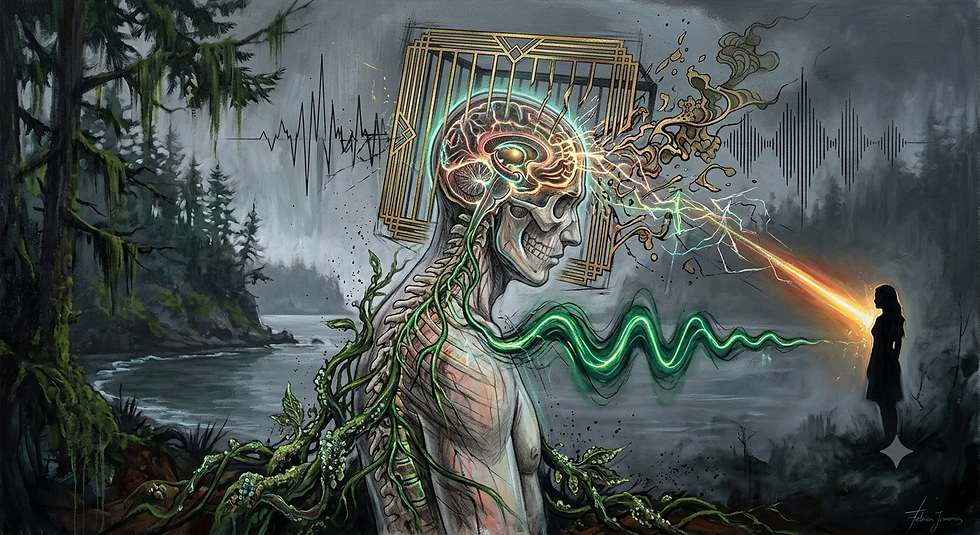
When the heavy concrete of prohibition finally cracks, it will be the roots of the natural world that break it apart. For too long, humanity has locked away the most profound medicines of the earth, fearing the very biology that evolved alongside our own. The future of true freedom is not just the right to cultivate a plant, but the restoration of our ancient, symbiotic bond with the soil. Cannabis acts as a profound biological key, waiting to unlock the radical healing of the human mind and spirit. When we finally allow the full potential of nature to flourish without restriction, we will witness the greatest awakening of collective well-being in human history.