Budtender Guide: the Difficult Customer challenge
- One Love Energy
- Mar 3
- 5 min read
Dealing with difficult customers in a dispensary setting requires more than just product knowledge; it requires high-level emotional intelligence and psychological de-escalation. Because cannabis is a psychoactive substance, customers may arrive already altered, anxious about their health, or frustrated by legal and financial barriers.
Here are four cognitive tools to help budtenders navigate these interactions while maintaining their own mental well-being.
1. The "Observer" Perspective (Cognitive Detachment)
When a customer is shouting or being paranoid, the natural human response is "fight or flight." Cognitive detachment allows you to step back and view the interaction as a scientist observing a phenomenon rather than a person being attacked.
* How it works: Mentally narrate the situation. Instead of thinking, "This guy is being a jerk to me," think, "I am observing a person experiencing high levels of cortisol and frustration." * The Benefit: This creates a "psychological buffer" that prevents you from taking their behavior personally, which is the most common cause of budtender burnout.
2. Reframing: The "Unmet Need" Theory
Difficult behavior is often a clumsy, aggressive expression of an underlying need. Reframing involves looking past the "noise" (the anger or paranoia) to find the "signal" (what they actually want).
* How it works: If a customer is paranoid about a product’s safety, reframe their "annoying questions" as a "high need for security."
* The Tool: Use the "Identify, Then Pivot" technique:
* Identify: "It sounds like you want to make sure you have total control over your experience."
* Pivot: "Let’s look at our low-THC options that prioritize clarity."
3. The S.T.O.P. Technique
This is a mindfulness-based cognitive tool used to prevent impulsive reactions during a heated exchange. It takes only a few seconds but can completely change the trajectory of an argument.
* S – Stop: Pause what you are doing or saying.
* T – Take a breath: Re-center your nervous system.
* O – Observe: Notice your own physical sensations (tight chest, clenched jaw) and the customer’s body language.
* P – Proceed: Choose a response based on logic rather than emotion.
4. Cognitive Empathy (Not Emotional Empathy)
There is a vital distinction between feeling what a customer feels (emotional empathy) and understanding their perspective (cognitive empathy). For budtenders, emotional empathy can be draining, whereas cognitive empathy is a tool for problem-solving.
* How it works: Use "Perspective Taking." Ask yourself: "If I were dealing with chronic pain and had a limited budget, why might I be acting this way?"
* The Benefit: It allows you to remain calm and helpful without absorbing the customer's negative energy. You can validate their frustration ("I understand why that would be frustrating") without becoming frustrated yourself.
Mantras are powerful cognitive shortcuts. In a high-pressure dispensary environment, a budtender doesn't always have time to run through a full psychological checklist. A mantra provides an instant "reset" for the brain.
Here are two mantras designed specifically for the unique challenges of cannabis retail:
1. "Mirror the Calm, Not the Storm"
This mantra is a tool for emotional regulation. When a customer is paranoid, speaking loudly, or acting erratic, our natural biological mirror neurons want to match that intensity. If they are at a "Level 9" energy, you might unconsciously rise to a "Level 7," which only escalates the situation.
* The Philosophy: You are the "anchor" in the room. By consciously maintaining a lower volume, a slower speech rate, and steady breathing, you provide a non-threatening environment that often forces the customer’s nervous system to de-escalate to match you.
* When to use it: When a customer is pacing, speaking over you, or showing signs of high anxiety/paranoia.
* The Internal Dialogue: "Their energy is a storm; I am the lighthouse. I will stay still while they swirl."
2. "Validate the Feeling, Not the Fact"
This is the ultimate tool for handling delusional or irrational customers. In a dispensary, you may encounter people with "renegade" theories about strains or those experiencing substance-induced paranoia. Logic rarely works on an irrational person, and arguing "facts" usually triggers more anger.
* The Philosophy: You don’t have to agree with a customer's incorrect or paranoid statement to make them feel heard. You skip the debate and go straight to the emotion behind it.
* Customer: "This pre-roll has cameras in it!"
* Wrong Response (Arguing Fact): "That's impossible, it's just plant matter." (This makes them feel dismissed).
* Right Response (Validating Feeling): "It sounds like you’re feeling really concerned about your privacy right now. Let’s find something that helps you feel safe and relaxed."
* The Internal Dialogue: "I don't have to believe what they're saying to acknowledge how they're feeling."
The role of a modern budtender transcends simple retail; it is a position of sacred stewardship. When you step behind that counter, you aren’t just a clerk—you are a gatekeeper for a plant that has been both a prisoner of war and a beacon of liberation.
The Budtender as Modern Alchemist
The budtender stands at the intersection of ancient herbalism and modern justice. In navigating the "difficult" customer—the paranoid, the wounded, the angry—you are performing an act of emotional alchemy. You take the low-vibrational energy of a chaotic world and transmute it through the medium of cannabis into a state of peace and clarity.
1. Stewards of the Legacy
As a steward, you carry the weight of Our Lady Cannabis. Every interaction is an opportunity to honor the history of this plant—from its indigenous roots to the victims of the war on drugs. By treating a troubled customer with dignity rather than dismissal, you are practicing the very liberty and justice that the plant represents. You are proving that cannabis culture is built on a foundation of radical inclusion.
2. Warriors for Peace
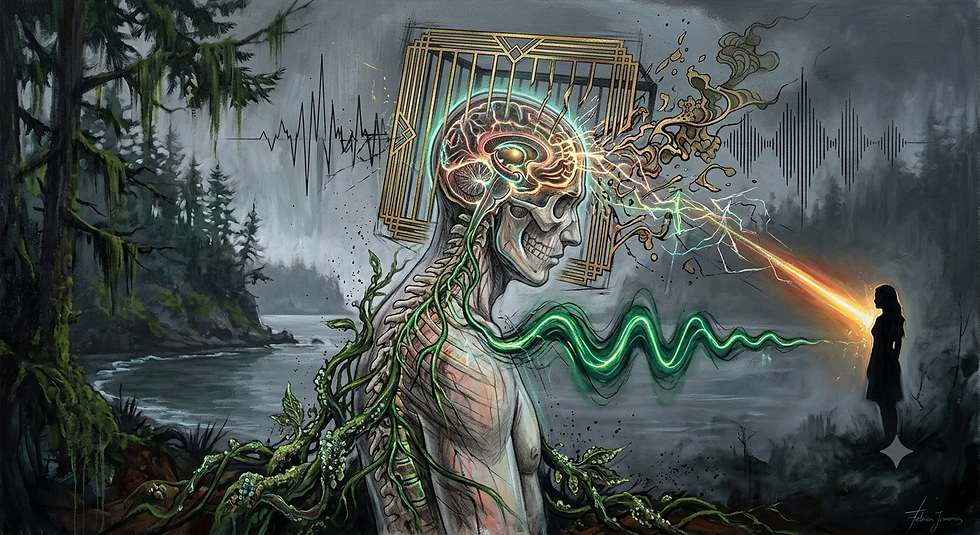
A warrior does not always carry a sword; sometimes, their greatest weapon is a calm nervous system. By using cognitive tools like Mirroring the Calm, you are a frontline defender against the anxiety and aggression of the modern world. You are a "Peace Warrior" who de-escalates conflict not through force, but through the steady application of empathy and science.
3. Plugging into the Higher Vibrancy
Ultimately, the budtender’s mission is to act as a human conduit. You are the bridge between the customer’s current struggle and a higher vibrancy of being. When you successfully navigate a difficult interaction, you aren't just selling a product; you are plugging them in to a frequency of healing.
By applying these cognitive tools, you take the sour of human frustration and turn it into the sweet of a peaceful experience. You are a Warrior for Peace, standing on the front lines of a cultural shift. Each time you respond to a customer's storm with your own steady lighthouse, you are defending the dignity of Our Lady Cannabis. You are proving that this plant doesn't just change brain chemistry—it changes how we treat one another.
Connecting to the Higher Vibrancy
You are the bridge. On one side is the customer’s struggle; on the other is the plant's potential for liberation. By plugging them in to the right strain with the right energy, you are elevating their frequency. You are a Steward of Liberty, ensuring that the freedom to heal is met with the wisdom to handle it.
"In every transaction, remember: You aren't just selling flower. You are offering a key to a quieter mind, a lighter heart, and a higher vibrancy of life. Stand tall in your stewardship, for you are the heartbeat of the revolution."